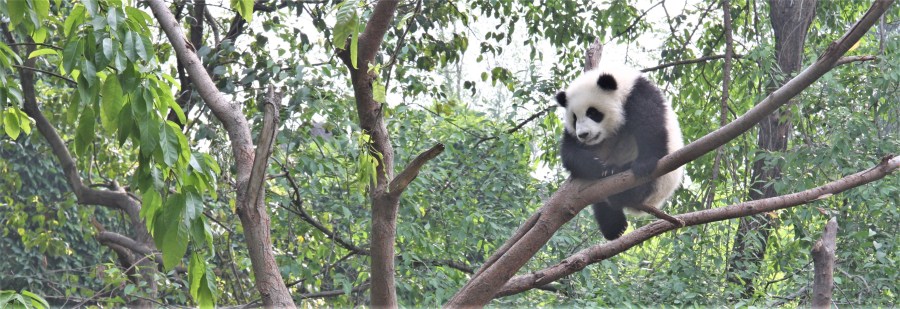
The bamboo-eating giant panda is one of the most iconic endangered species. Having caught the eye of World Wildlife Fund (WWF), this adorable bear is the inspiration for the WWF logo since its founding in 1961.

“cuteness” factor
- distinctive black & white coat
- round flat face, generous cheeks
- big black-patched eyes
- snub nose
- pom-pom ears
- fuzzy tail
- toddling gait (tumbling about like toddlers)
No visit to Sichuan is complete without seeing the pandas at Chengdu Panda Breeding and Research Center.
It was cuteness overload from the first panda-sighting, as we ‘ooh-ed and aah-ed’ our way through the different enclosures for the next three hours. Though I saw lots and lots of pandas of all ages and sizes, I was still enthralled by each new encounter.
Eat, sleep, pose, play, repeat


A day in the life of a Giant Panda
A panda’s primary activity is sleeping. When not dozing or resting, they scrounge for food – sitting upright or lying down to eat it.


These fussy eaters will only eat 60 of the 500 types of bamboo found in China, specifically those growing at 1,800 to 2,500 meters above sea level.
Each day, an adult panda consumes either
– bamboo shoots (23 and 40 kg)
– bamboo leaves (10 to 18 kg)
– bamboo stems (17 kg)

On average, giant pandas weigh in at 100 to 115 kg
– Male pandas up to 160kg
– Female pandas 77 to 100 kg.
Average lifespan
– 20 years in the wild
– 30 years in captivity
Unlike other bears from temperate climates, giant pandas do not hibernate.
Natural posers, natural sleepers
These excellent tree-climbers start to climb small and short tree branches from as early as 6 months old.


Panda breeding is a challenge
A successful newborn is always a cause of celebration. Reproduction is difficult due to a short mating season (March till April) with adult females only able to conceive once a year for less than two days. Pandas are always summer babies, as an average pregnancy is about four months (135 days), giving birth sometime in July or August.
At the Panda Story Cinema we watched a short documentary on the panda reproductive cycle.

A panda cub is born pink, blind, and toothless.
After a week or two, the skin turns gray. At a month old, the cubs are covered in fluffy black and white fur.
A panda cub will weigh 100lbs by its first birthday.
Panda cubs stay with their mothers for up to three years.
The ‘lesser’ Panda
The base is also home to other rare and endangered species like the red panda. This racoon like creature is a very shy, small animal with red fur and a very long bushy tail. It weighs around 3 to 6 kg and is nocturnal in nature.


Natural Habitat
The sprawling research base is beautifully landscaped to blend in with the natural environment for the giant pandas. Wide pathways that wind around the park are lined with verdant bamboo, making it very conducive for a walking tour.


We ended our tour at a huge lake populated by black swans and koi fish. En-route, we were dazzled by pretty flowers, colourful blooms at the rose garden and were treated to a display of beautiful plumes by the resident peacocks wandering about.


Visited 15 April 2013
“Soft power”
China has been sending its black-and-white ambassadors abroad since the 1950s as part of what is known as “panda diplomacy ”. The loan agreements specify that panda cubs born abroad must be returned for scientific research and reproduction purposes.
Reclassified to ‘vulnerable’ from ‘endangered’, Today there are about 1,800 pandas living wild in the mountainous region of central China while another 600 pandas live in zoos and breeding centers around the world.
And if reading the above has given you panda-mania, click here to see which zoo near you has these adorable furry bears.
Chengdu Panda Breeding and Research Center
Set up as a non-profit breeding facility for giant pandas in 1987 with six rescued animals from the wild, the main purpose of the park is studying, breeding, and rearing giant pandas to ensure the survival of this rare animal species. The center opened to the public almost ten years later.

Besides creating and imitating the natural habitat of giant pandas, the research center caters to the pandas’ every need with a delivery room, nurseries, kindergarten, feeding area, panda hospital and a scientific discovery centre.

Located just 10 km (6 miles) from downtown Chengdu, the research base now has a panda population of over 200 including adults, teens and cubs, as well as other wildlife and endangered species.
 phoenixtrails.home.blog