
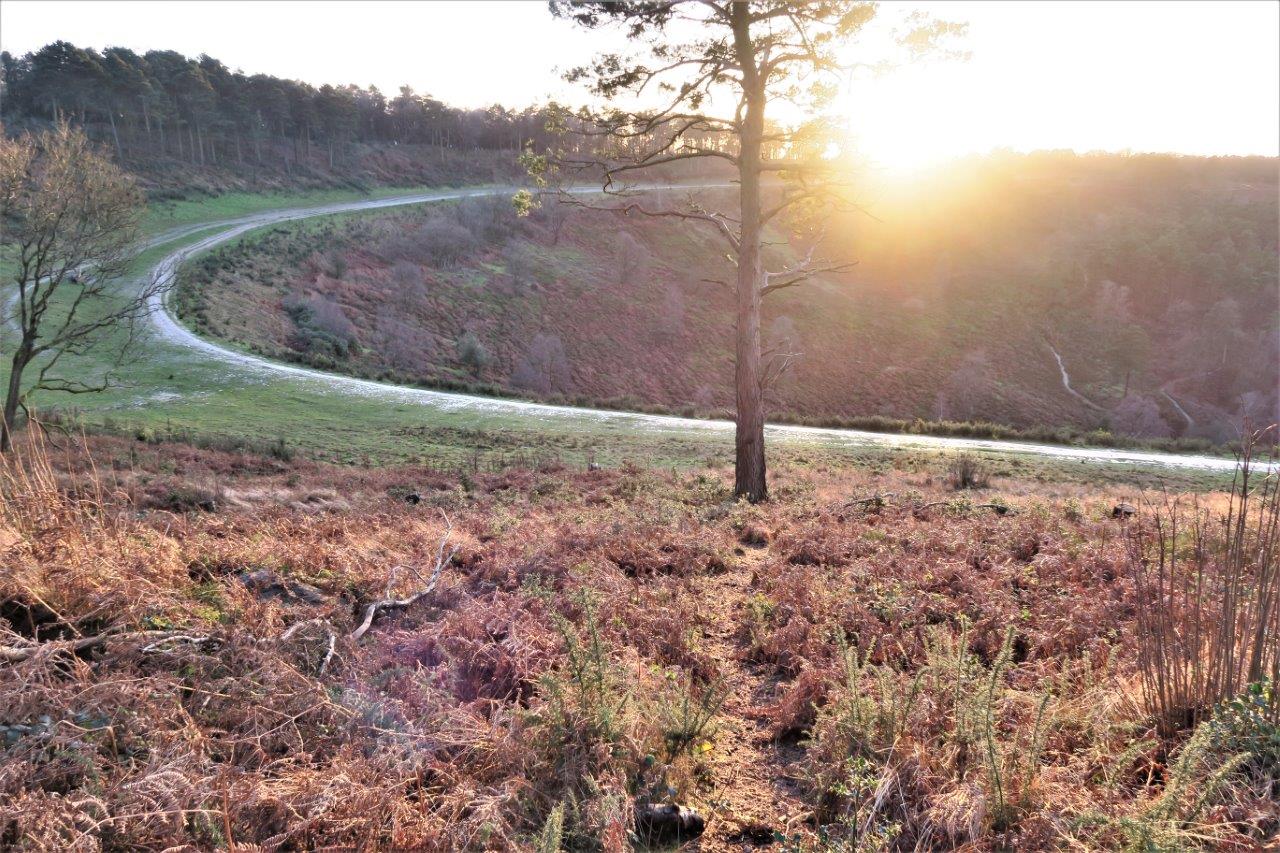
The Devil’s Punch Bowl is a massive depression with several walking trails over the heathland with some magnificent views to admire along way.
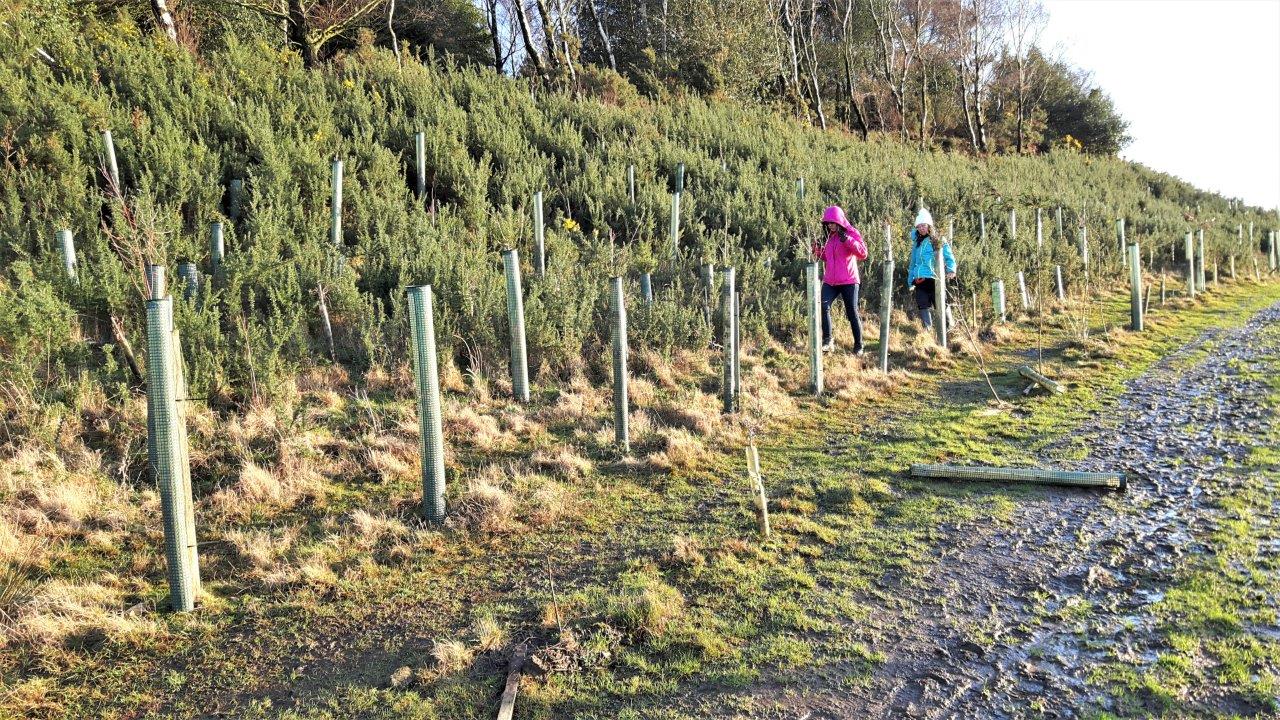
We did a short walk here on the eve of Christmas 2015. Though the sun was out, I felt cold the entire time.
An Area of Outstanding Natural Beauty, the Devil’s Punch Bowl is part of a 282.2-hectare (697-acre) nature reserve situated to the west of Hindhead in southern England.

Taking a left from the carpark, we followed a woodland path, rambling up and down the slopes, before hitting a tarmac section, frequented by hikers, dogs and cyclists.
One of the trails we explored led us to a cottage. We respectfully turned back.


Forty minutes later, we punched out of the ancient woods via a footpath, and I had my first glimpse of the bowl-shaped hollow.

Gibbet Hill stands at highest point of the rim of the bowl at 272m (892ft) and is the second highest point in Surrey. From the top of this sandstone hill, it is possible to have clear crisp views over the Surrey Hills on a bright winter’s day.


Largest spring-formed feature in England
A deep valley of dry sandy heath, this natural amphitheatre was created when eroding spring water beneath the sandstone, caused the upper layer to collapse, until it hit the clay below.

With its steep sides, the Devil’s Punch Bowl has become a natural nature reserve, covered with heath with fresh streams running through the tall trees and areas of woodland.
The Punchbowl has a long history and tradition including a source of many stories about the area. Legend has it that the devil spent his time tormenting the god Thor by pelting him with enormous handfuls of earth, leaving the great bowl that visitors can see today.


One of the stories of the Commons is that it is the inspiration of Sherlock Holmes detective books. Sir Arthur Conan, the author, lived at Undershaw in Hindhead from 1897 to 1907 and frequently walked on the Commons.
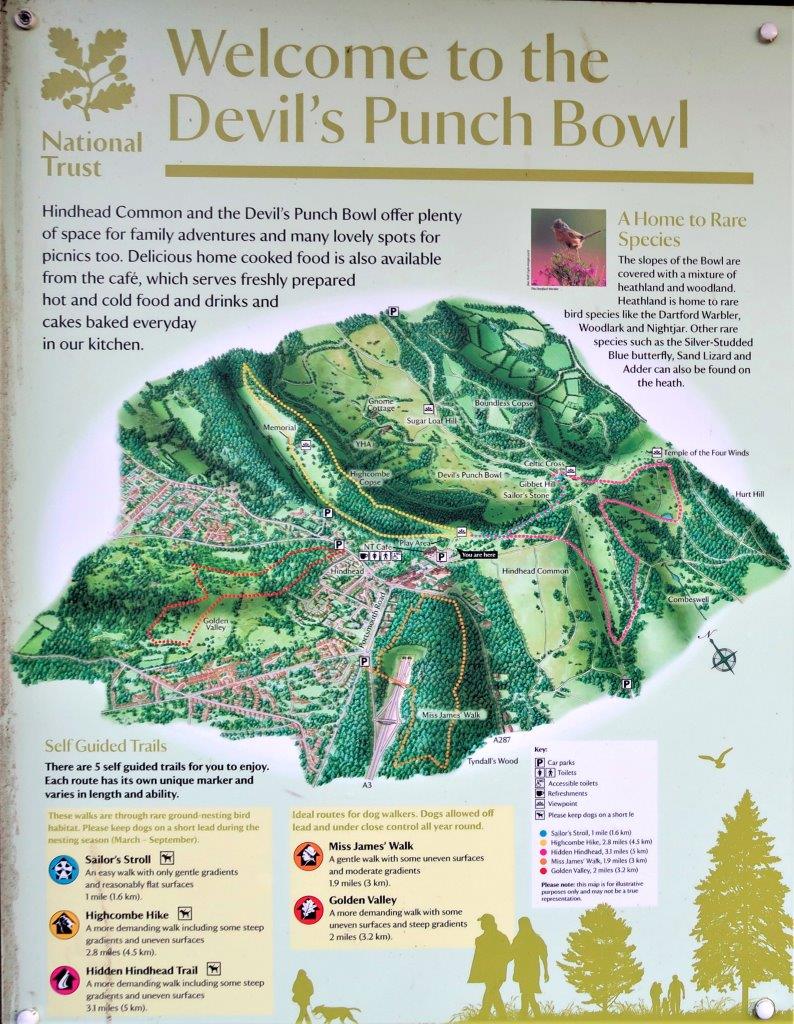
Now that all traffic passes through the Hindhead tunnel (built 2011), the old A3 (London to Portsmouth route) is redundant to cars and has become a super highway for wildlife crossing from the Devil’s Punch Bowl onto Hindhead Commons.
 phoenixtrails.home.blog