
It was my very first visit to Taiping and I naturally wanted to see everything, in one day.
Taiping’s has ’33 historical firsts’ of which I only managed to see a fraction of. Some of the more notable first-of-their kind-in-Malaysian-history sites include the Taiping Lake Gardens, Perak Museum, Taiping Prison, Taiping Railway, Taiping Post-Office, Taiping Clocktower, Taiping Zoo, Maxwell Hill and All Saints Church.
Thanks to the best efforts of my travel buddies, I was able to cover key spots below :
- Taiping Lake Gardens
- My Charcoal Factory
- Kuala Sepetang (Port Weld)
- Antong Coffee Mill
- Amelia Earhart Mural
- Maxwell Hill Falls
- Burmese Pool
- Taiping Eats
Taiping Lake Gardens

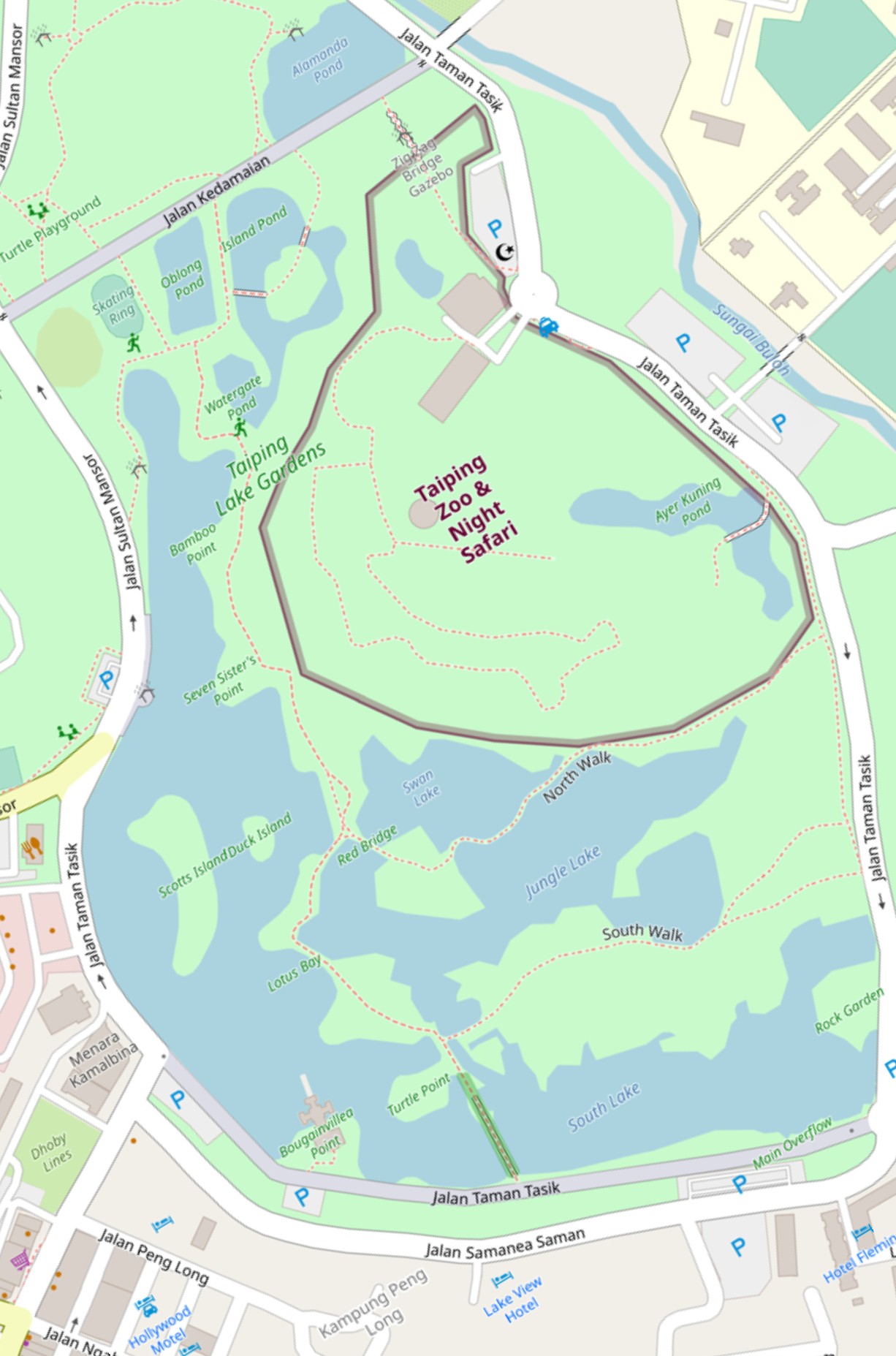
Opened in 1880, Taiping Lake Gardens is Malaysia’s first public garden. A former tin mining pool, the 160-acre park has 10 scenic lakes and ponds with a network of bridges connecting to islands in the middle.

Adopting a Victorian garden design and local foliage, numerous terraces, bridges and walkways weave through the various gardens decorated with fountains, gazebos, and other lawn ornaments.
The towering Raintrees (“Pukul Lima” in Malay) planted around the perimeter of the lake are at least 130 years old and has become the highlight of the gardens since the first heritage tree toppled over in 2017 and had to be propped up.
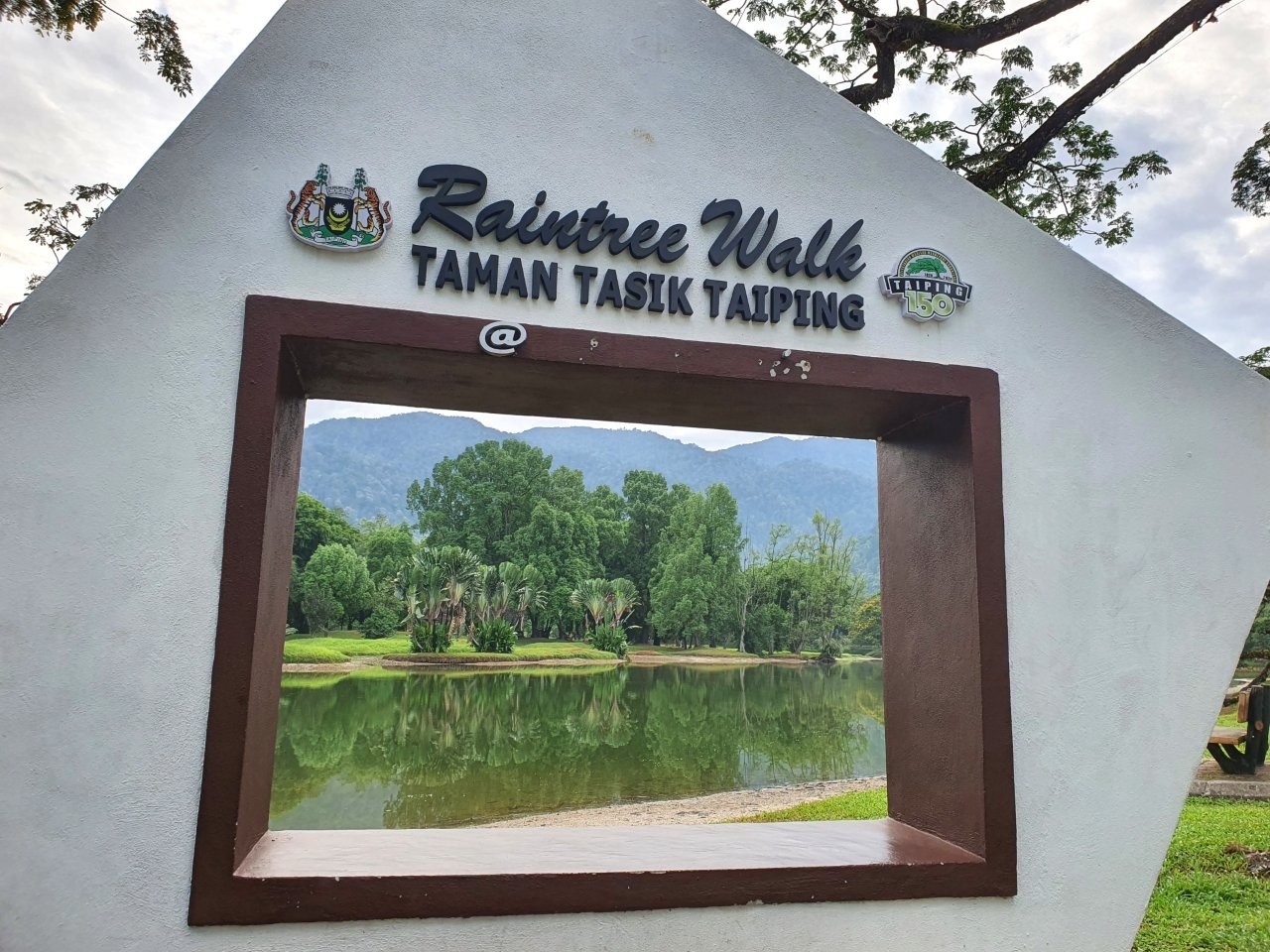
An all-time favourite, Taiping Lake Gardens promises picturesque views, wildlife spotting, and activities for all ages – be it walking, cycling, running or pedal boating.
The walkways that circle the lake have strategically placed benches and vantage points for taking in the view. Also housed in the vicinity is the Taiping Zoo.
5 AUGUST 2025
There was a lot going on in the park when we started our exploration at 7am. Besides joggers and walkers, we saw multiple taichi & zumba groups dancing energetically to loud music for their high octane cardio burn.
Island Pond
Surrounded by water, Island Pond can be accessed via two bridges at different ends.

A row of Grecian columns – the perfect backdrop for a photo opportunity, distracted us momentarily.

Next, a catfish feeding frenzy caught our eye while crossing the bridge to the island – a tranquil green haven with towering trees and dense shrubs.

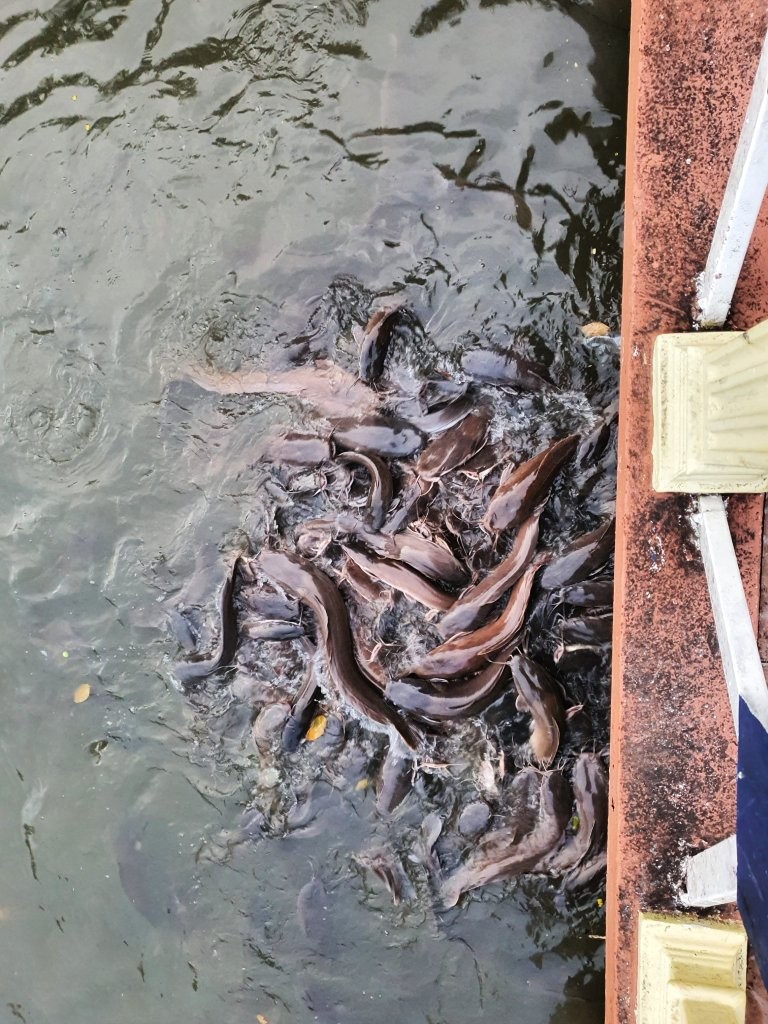
Oblong Pond & Watergate Pond
Strolling on, a slight breeze interrupted the morning calm, creating gentle ripples in the water, distorting colours and shapes. For me, the blurry reflections gave off a dreamlike, ethereal quality to the scene.


At the northern end of West Lake, we spotted a milky stork, an open bill and several egrets foraging in the shallow water.
Swan Lake & Jungle Lake
Continuing south, the tree-lined path took us past Bamboo Point and Seven Sister’s Point. Emerging into an open area next to Swan Lake, we followed the left fork to a red bridge and onto North Walk.
The meandering North Walk
cuts through Swan Lake (left)
and Jungle Lake (right).


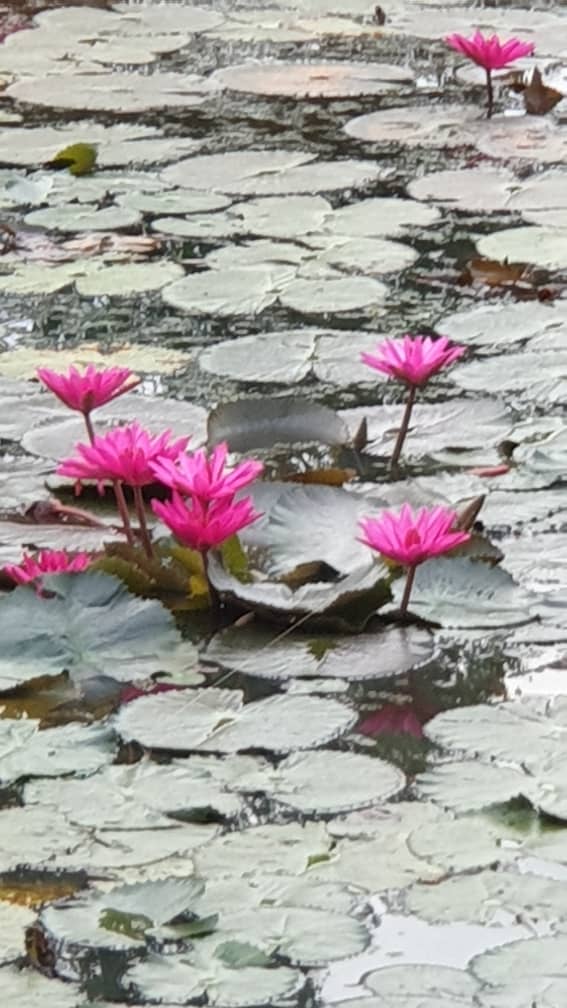
After that short detour, we rejoined the path towards Lotus Bay which was absolutely BLOOMING with a sea of pink flowers rising in bold contrast against a bed of green lotus leaves.


With mist-covered hills dominating the horizon, the walkway presented endless viewpoints for a layered landscape composition featuring water, forest, and hills.
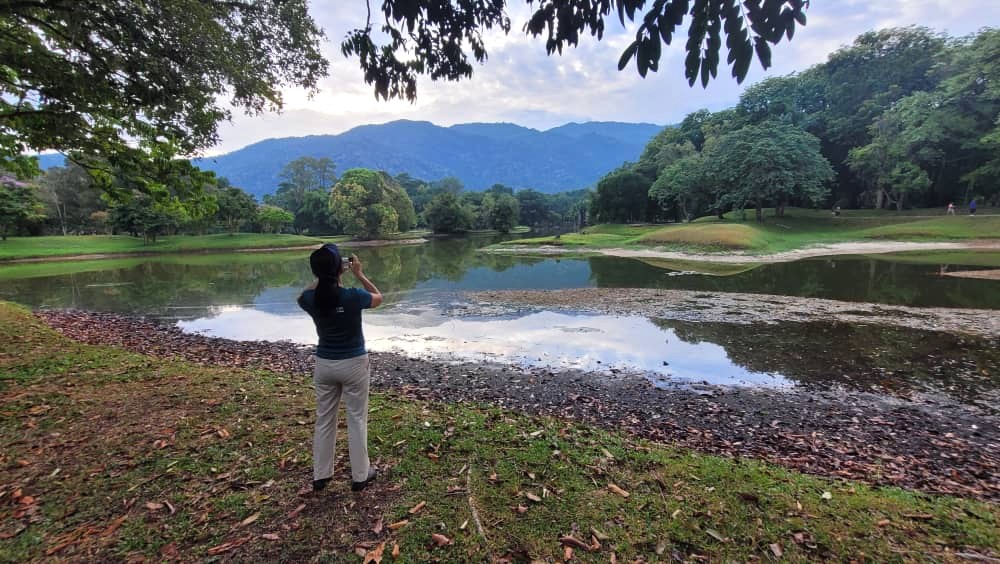

Past Turtle Point, at an opening near the end of the Chinese Bridge, I managed to get a reflection shot of the Boat House amidst greenery.
Raintree Walk
Taiping’s beloved Raintree Walk is a pedestrainised road lined with 31 majestic raintrees along the lake’s edge.
Century-old Raintrees
These towering trees have big overhanging branches that stretches over the lakeside.
The twisting limbs arch and dips towards the lake, providing a beautiful canopy effect.

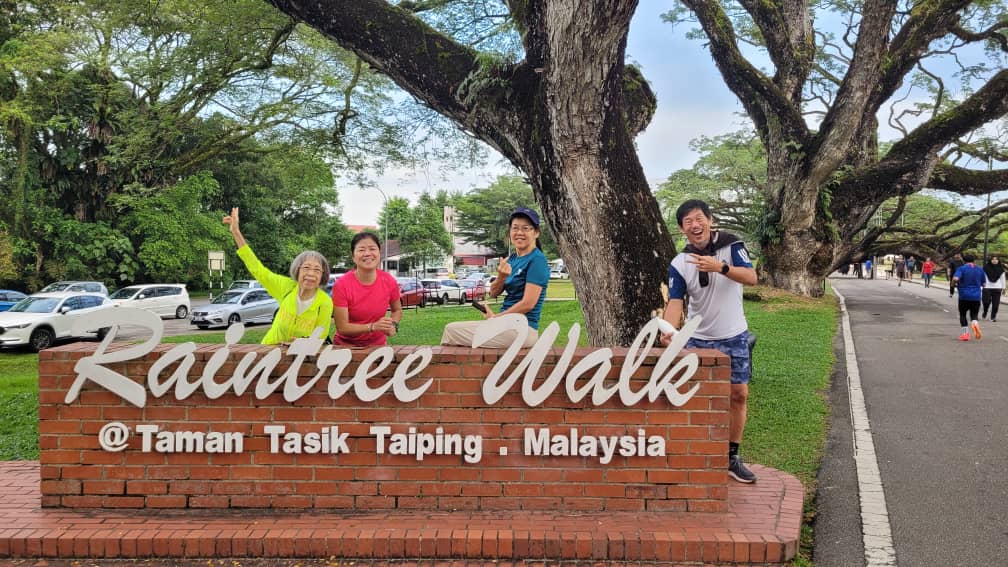
First planted in 1898, some of the aged trees (130-140+ years) started to fall due to internal decay, root damage, canopy over-strain, and/or external stress such as storm damage. Since 2016, four collapsed trees (2017, 2018, 2022, 2025) have been salvaged while one rotted and dead tree (2021) was removed.
Today, conservation efforts to protect these grand old trees include :
- protective measures and monitoring – regular inspections, testing for disease, banning of vehicular traffic
- restore fallen / damaged trees – save rather than remove : reposition, prune, prop up with metal supports
- Community involvement – recognition of heritage value & enhance public amenities
The iconic Raintree Walk is truly amazing. The sprawling canopy, leaning trunks, propped up branches (to preserve their dramatic arch) and public amenities make for a delightful stroll among these legendary giants.

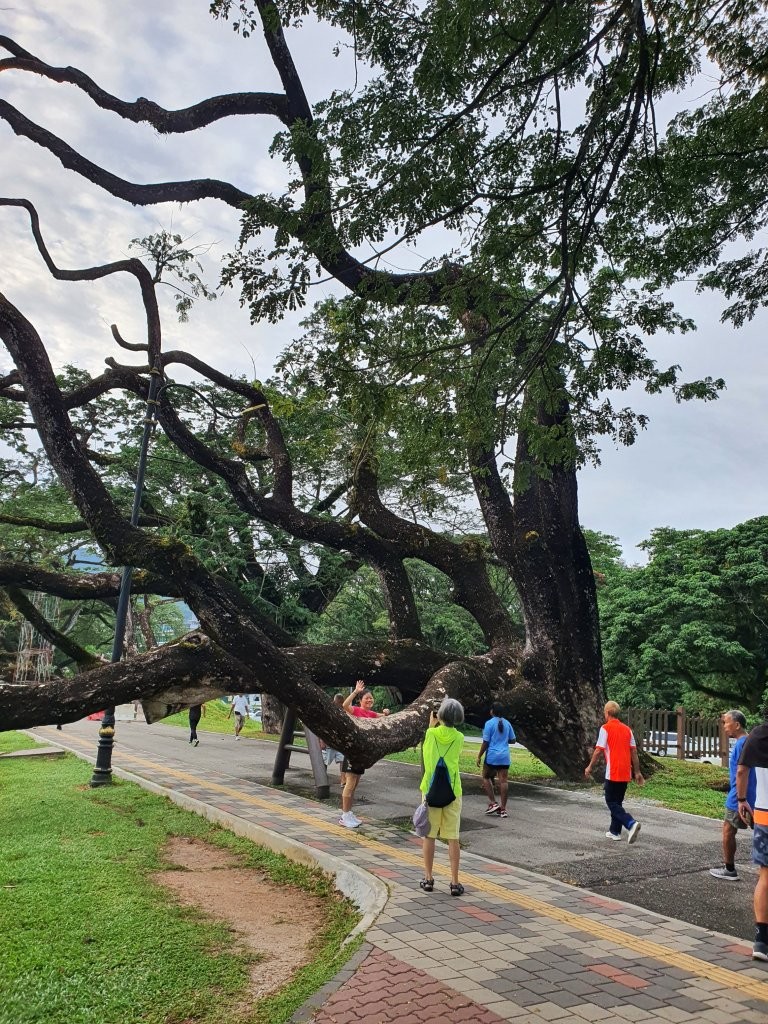

Fun Fact : This section of public road was closed permanently to vehicular traffic on 15 December 2017 to protect and preserve the centuries-old trees scattered along a 630m stretch.
It was a well spent 1.5 hours reconnecting with nature, soaking in the landscape, taking pictures, crossing quaint bridges, and starting the day right with a workout.
Suggested Walking Routes
- Taiping Lake Loop ( ~3 km): A loop combining Jalan Taman Tasik, Jalan Sultan Mansor, Jalan Kedamaian to rejoin Jalan Taman Tasik. Its a full‑lakeside perimeter walk.
- North + South Loop (~1.8 km): This shorter circuit through the park, lets you encounter charming bridges, water islets, variety of birdlife, aquatic plants and scenic landscapes.
- Taiping Lake Gardens & Zoo Loop (~2 km): Incorporates some lakes + the Taiping Zoo & Night Safari at one end. A good mix of nature and attractions.
The coastal fishing town of Kuala Sepetang is home to the oldest charcoal making industry in the country with over 120 factories still in operation, most of which are family-owned and run by the third generation today.
My Charcoal Factory
Our next stop was to My Charcoal Factory, that produces mangrove wood charcoal the old-fashioned way, using traditional techniques that has been passed down and preserved from the 1930s.
You don't just visit this place — you walk through history, slow-burned into every brick.
The charcoal making industry in Kuala Sepetang exudes a timeless appeal with its airy sheds, wooden structures and atmospheric smoky, dusty feel.
Beams of sunlight slices through slats in the roof, cutting through the smoke.


Mr Chuah of My Charcoal Factory readily shared valuable insights on the labour intensive & physically demanding process, skillsets, challenges and opportunities. His factory has 6 furnaces which translates to 2 permits.
Wood Selection & Harvesting
This permit allows charcoal operators to harvest mangrove trees (25 – 30 years old) that grows abundantly along the coast. The wood is then transported to the factory by boat. The stacked-up logs are sun dried for 2-3 days.


The massive 40,000-hectare Matang Mangrove Forest Reserve is the largest mangrove reserve in Peninsula Malaysia. For sustainable harvesting, the mangrove trees are cut on a 30-year rotation cycle and the operators are responsible for replanting trees that are felled.
In order to produce high-quality charcoal, the furnace’s igloo shape is important as it ensures even heat distribution, allowing the mangrove wood to be “cooked” at the right temperature.
8Chuah, 3rd generation owner of My Charcoal Factory
Building the furnace
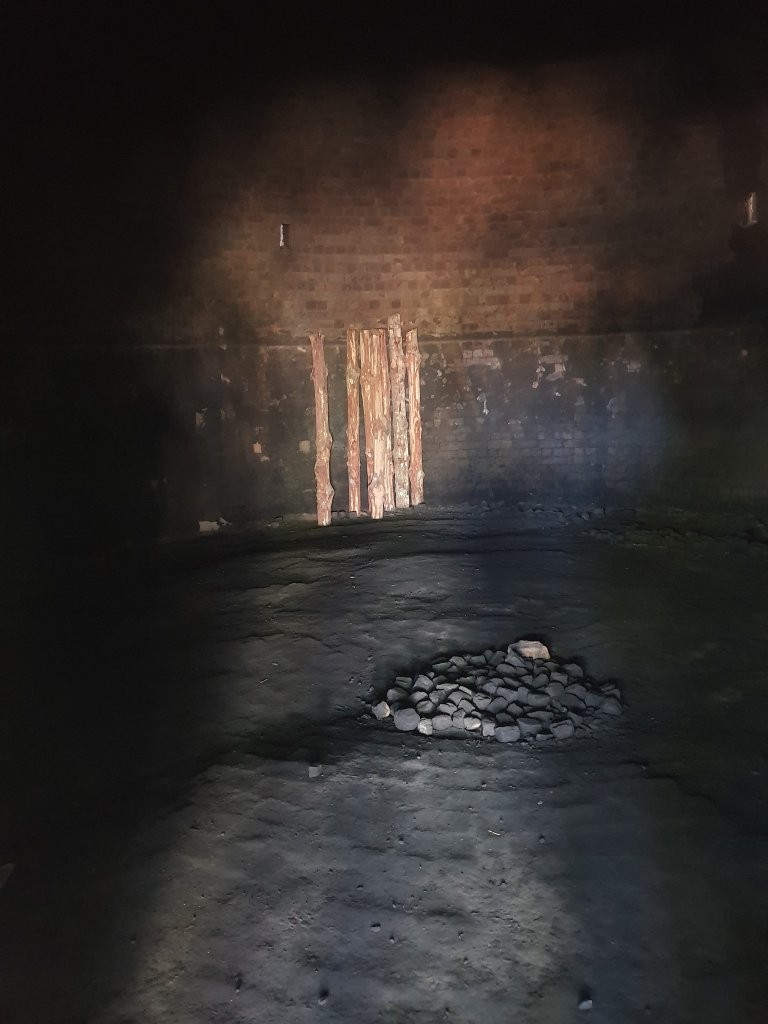
The construction of the igloo-shaped “gok” or kiln requires 26,000 bricks, bonded with yellow mud.
Cement is not an option as it cracks under high temperature.


Each furnace can hold 1,500 mangrove logs, stacked vertically and tightly, for the month-long baking process.

Charring
A small fire is started at the entrance of the kiln and gradually fired up to about 220–250°C. This intense heat is maintained for 10 days
The kiln is left partially open to allow airflow and to control the burn rate.

Carbonization
After the initial drying, the next phase involves sealing the kiln openings with mud and bricks to lower the fire’s intensity. During these 10 – 14 days, the temperature and airflow must be carefully controlled to ensure even charring and to avoid burning the wood to ash.
Cooling & Transformation
Once ‘baking’ is complete, all the air vents are completely sealed and the furnace is left to cool naturally for 8 days. This is when the wood transforms into charcoal.
Thereafter the kiln is opened, the charcoal is retrieved and sorted by size, quality & moisture content.

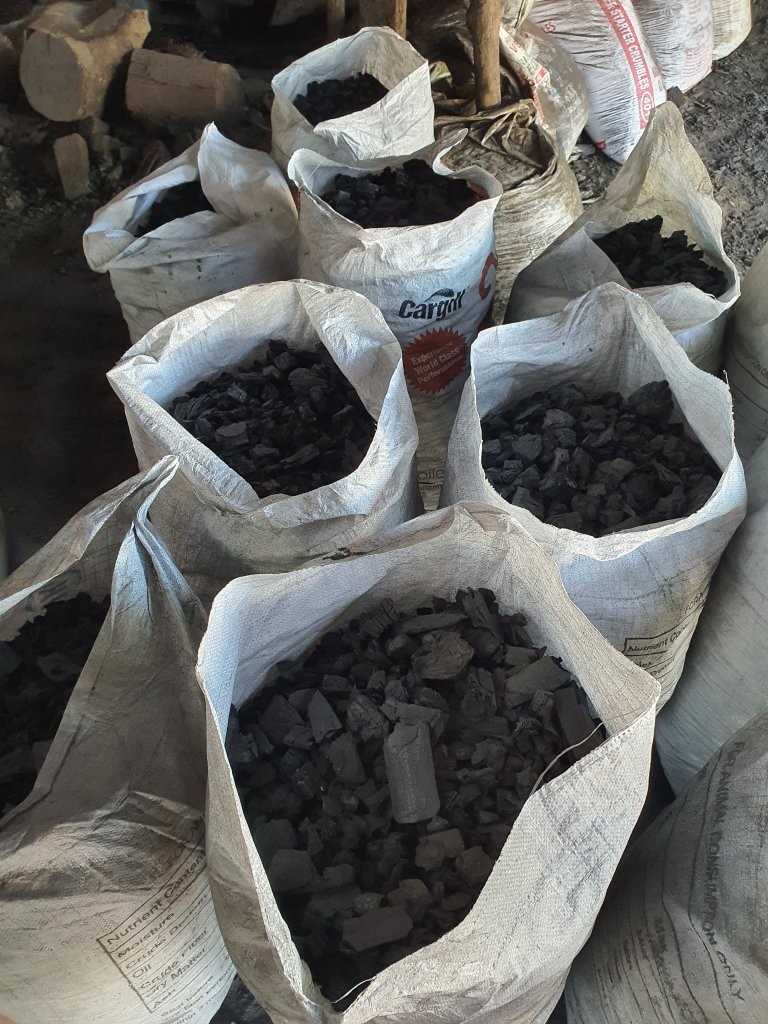
When asked on the charcoal output per year, Mr Chuah candidly shared that he can’t give me a figure as the yield fluctuates year-on-year.
Nb. One kiln with 1,500 logs weighing up to 50 metric tonnes produces just 10 metric tonnes of charcoal (20%) after the burning process.
Traditional Charcoal making process
– controlled, slow-burning techniques in kiln without open flames
| Wood Selection & Harvesting | mangrove trees are felled, sawn into 2m-long logs, transported to factory |
| Drying (2 – 3 days) | Left under the sun to remove moisture |
| Charring (10 days) | Intense heat up to 220 – 250C |
| Carbonisation (14 days) | Low burn at 85C, all vents sealed |
| Cooling (8 days) | Charcoal is formed |
| Retrieve, Sort & Pack | Export and downstream byproducts |
Downstream byproducts
Mr Chuah also gave us a detailed explanation of the many benefits of charcoal-based products on display at the entrance :
- wood vinegar – collected from vapours / condensation is an effective mosquito / leech repellent
- charcoal soap
- anti-itch shampoo
- deodorising bag – air/moisture absorbers
- charcoal stump souvenir
We did not leave empty-handed.
Kuala Sepetang (Port Weld)
The sleepy village of Kuala Sepetang makes for an interesting wander with its labyrinth of narrow alleys, wooden houses, local markets and seafood restaurants.

The Port Weld Bridge (minus roof) is still the perfect spot for views over Sungai (River) Reba with colourful fishing boats and mangrove forests in the background.

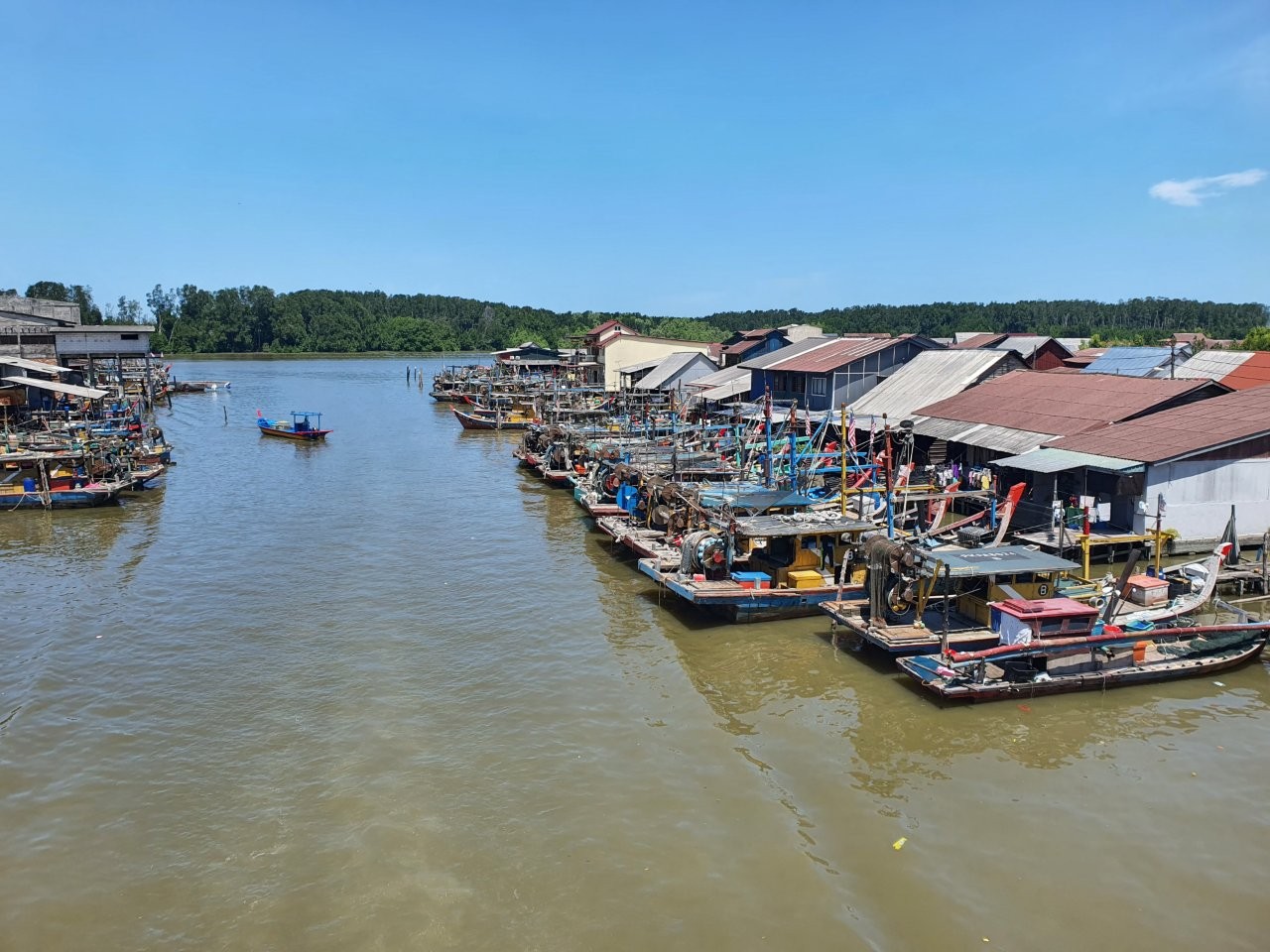
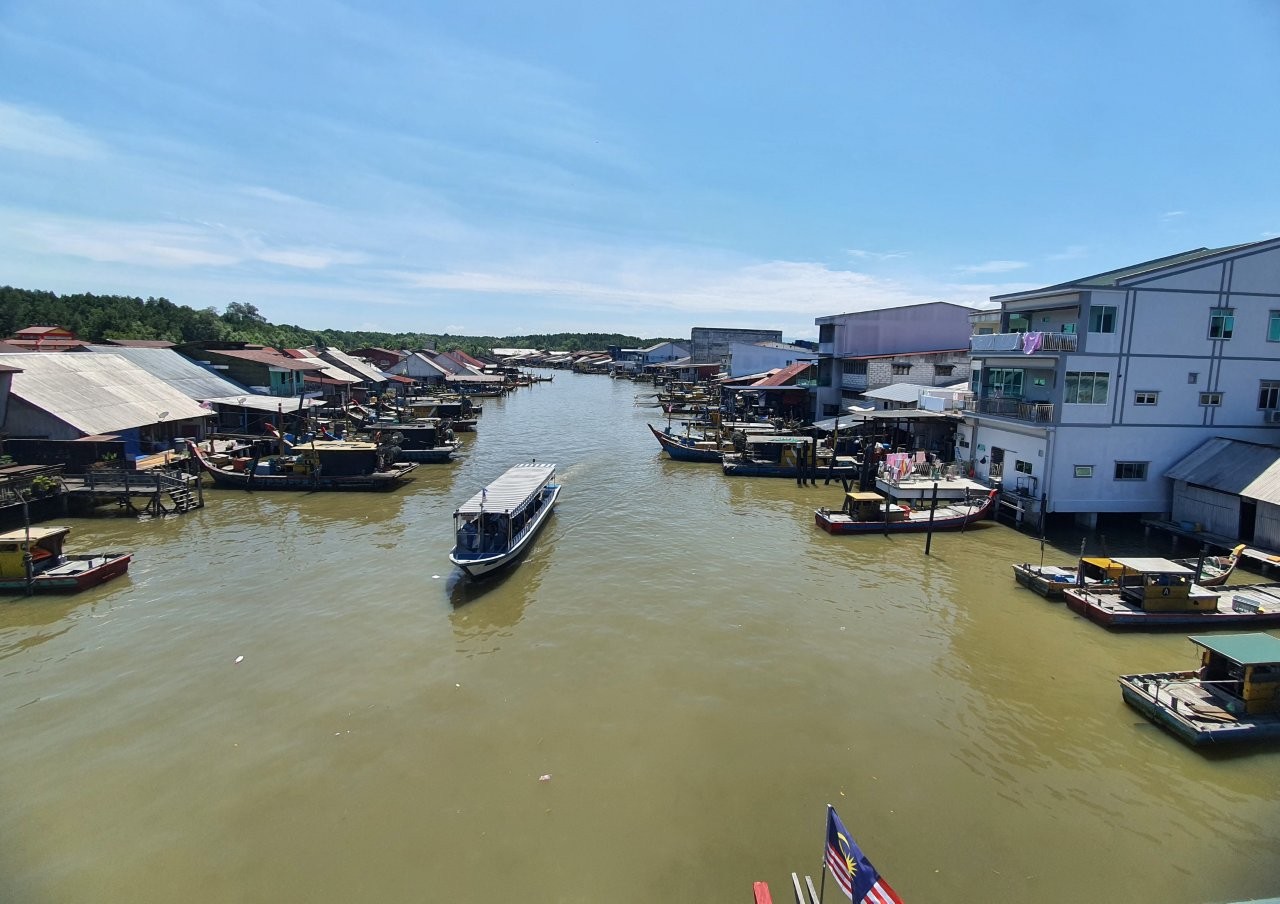
Peter made it a point to show me the site of the nation’s oldest railway station.
Heritage Marker
The Old Port Weld Railway Station Signboard marks the location of the former Port Weld / Kuala Sepetang railway station.
Built in 1884, the Taiping-Port Weld railway line opened in 1885, Malaya’s first railway line.

For lunch, we had our heart set on Matang-style seafood porridge but it was their off-day. Plan B was Kang Kao Riverside Restaurant, easily spotted by the huge eagle head sculpture on the roof.


The signature ‘curry prawns in a loaf’ dish is a must-try. The prawns were a good size and fresh, the bread though succulent on its own, exploded with flavours when dipped in the fragrant curry. We moderated our seafood indulgence with oatmeal mantis shrimp, greens and tofu.
Located about 16km west of Taiping, Kuala Sepetang is home to the historic Port Weld, oldest charcoal making industry, mangroves and diverse wildlife. Boating tours are available daily to explore estuaries, visit floating fish farms, as well as wildlife spotting that includes eagles, fireflies and pink river dolphins.
Antong Coffee Mill
Antong Coffee is famous for its traditional “Kopi O‑powder” (pre‑sweetened black coffee) that is made the old-fashioned way, over wood-fired stoves to enhance their flavour.
Established since 1933, this self-proclaimed oldest coffee mill in Malaysia is also a historical landmark.
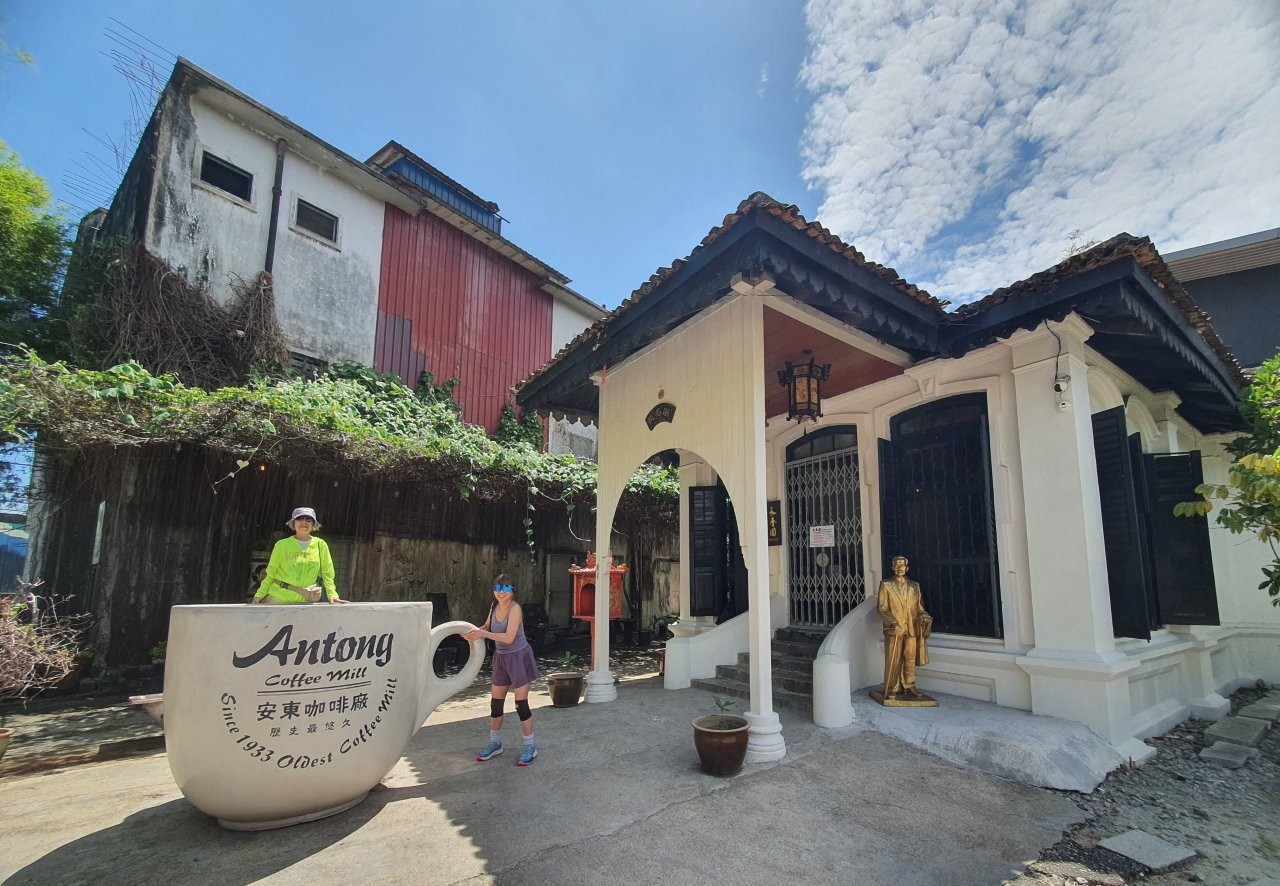
Now a tourist destination, this traditional coffee mill welcomes visitors to its open-air factory to see the traditional way of roasting coffee for the unique smoky aroma and distinct flavour.
The rich aroma of coffee assaults your senses even from the carpark. Following our noses, we peeked into the factory, marveling at the original machines and equipment (with upgraded motors) still in use.

After 15 minutes of roasting, molten sugar is added to the vat including other secret ingredients to give the coffee mix its distinctive flavour.
7-step coffee production process
| Roasting | Beans are rotated in a wood-fire oven for even roasting until cracking sounds are heard. (Roasting is crucial for developing the coffee’s flavour and aroma) |
| Dehusking | Once cooled, transfer to two large spinning wheels for husks removal by abrasion. |
| Mixing | Coffee beans are cooked in a black syrup of melted sugar, salt and margarine or butter in two large vats over wood fires |
| Cooling | Thick and pulpy coffee mixture is scooped out, spread on a large metal plate to cool. |
| Crushing | Hardened coffee mixture is manually smashed into small fragments. |
| Grinding | Mill into coarse-grained powders |
| Packing | Packed in tin cans — distribute to local coffee shops to make kopi-o (black coffee). |
Nb. The factory is most active in the mornings, so try to time your visit early to catch all the action.
A giant mural greets you at the entrance to the showroom.
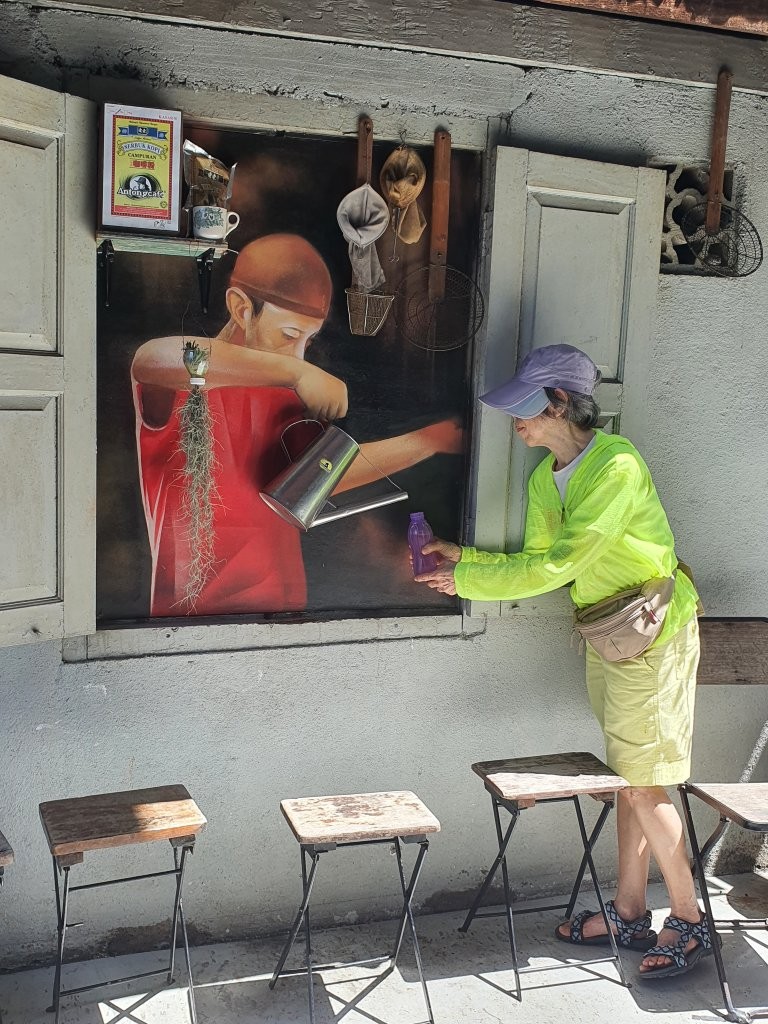
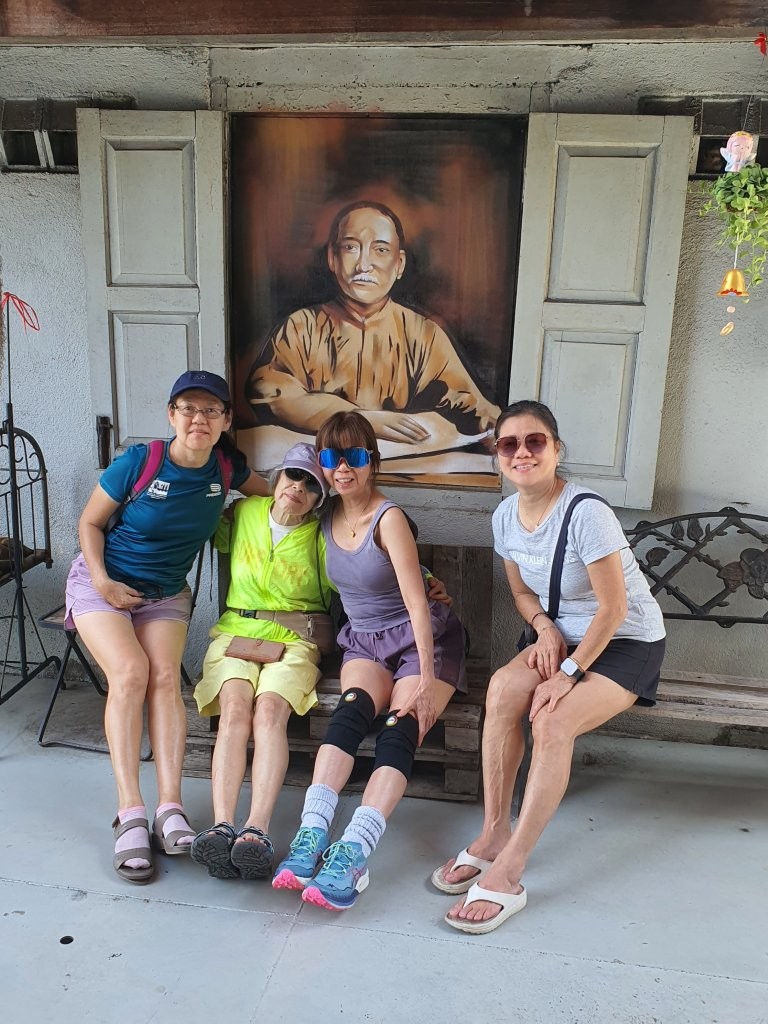
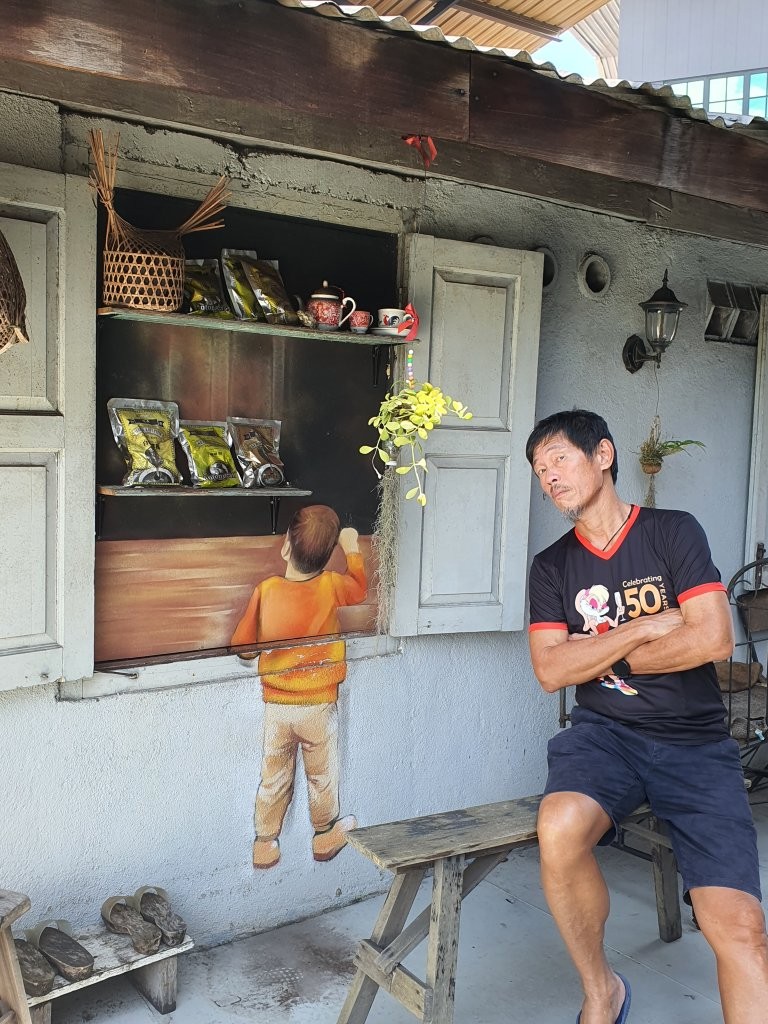
Behind the factory is an interactive wall mural – nostalgic scenes with vintage items for some creative shots.

Changchun Pu Villa (Garden of Eternal Spring)
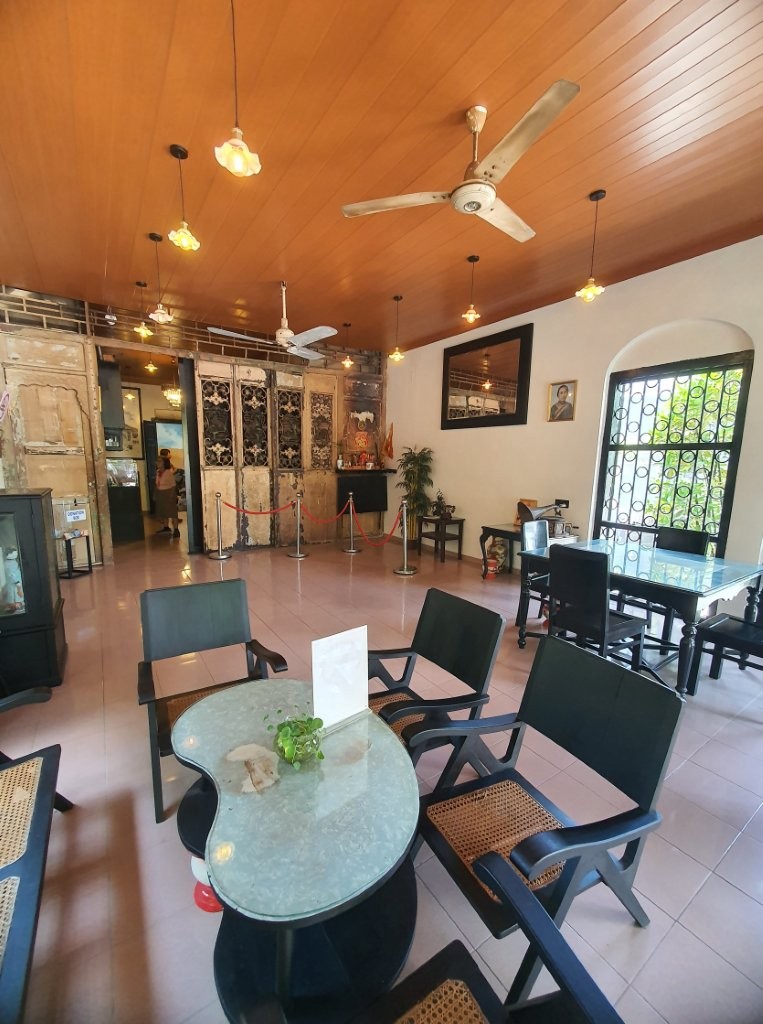
This colonial-era heritage villa with the statue of Dr. Sun Yat-sen at the entrance is a central part of the charm and significance of Antong Coffee Mill.
Known as Changchun Pu, it is the former residence of Chen Cuifen, companion and confidante of Dr. Sun Yat-sen, the founding father of modern China.
Forgotten Revoluntionary
Chen Cuifen (1874 – 1960) met Sun Yat-sen in Hong Kong in the 1890s. Thereafter, she was with him throughout his exile years, taking care of his daily needs and supporting his career. Though she risked her life to deliver secret messages and smuggle firearms for him and the revolution, their relationship was never officially recognised.
Her life was a mix of political dedication, personal sacrifice, and historical obscurity.

After their relationship ended, Chen Cuifen travelled alone to Malaya in 1914, making Changchun Pu her home until 1931. She spent her final years in Hong Kong, passing away in 1960.
The restoration of Changchun Pu villa in the early 2000s brought her recognition in Malaysia, telling the story of a woman whose contributions have long been overlooked.
Visitors get a glimpse into the personal life of a revolutionary leader from the display of :
- Old photographs, portraits of Sun Yat-sen and Chen Cuifen
- Rare revolutionary memorabilia
- Newspaper clippings, letters and calligraphy
- Vintage furniture and personal artifacts


Coffee Museum & Gallery
Two recent additions at the upper level include a museum on the origins & history of coffee, while the adjoining room depicts scenes of coffee lovers from olden days, enjoying a hot cup of strong black coffee in a coffeehouse and kopitiam.

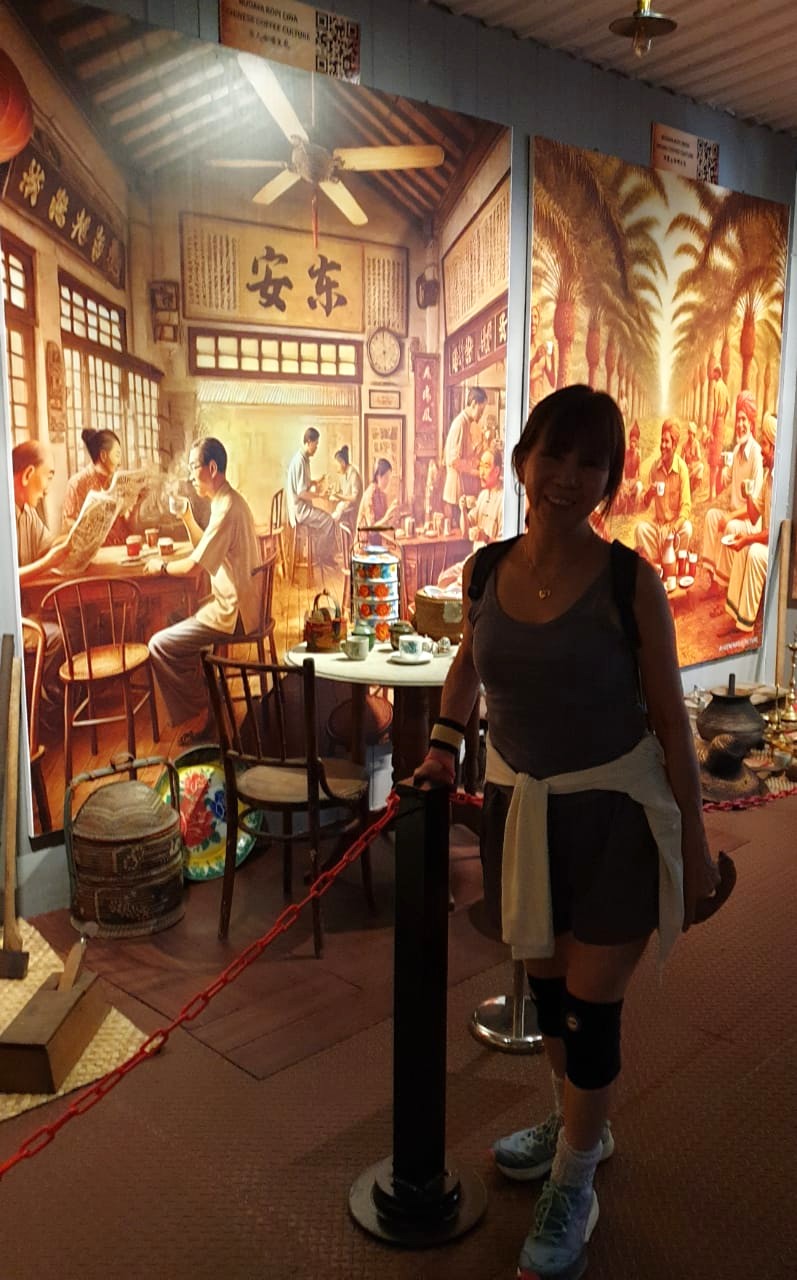
There were also some vintage cars on display during our visit.

Coffee Showroom
With over 20 types of coffee-based products under the Antong brand, deciding what to buy can be a challenge.
To assist visitors, selected coffee sampling is available.


My “just one scoop can’t hurt” folly
The Triple Shot Espresso ice cream lived up to its name — and I paid for it with a sleepless night.

In 1940, Tiah Ee Mooi (founder of Antong Coffee Mill) rented the site to set up his coffee mill, subsequently buying the property in 1942. It is currently run by the 3rd generation Tiah family.

The mill is open daily : 8.30am - 5.30pm.
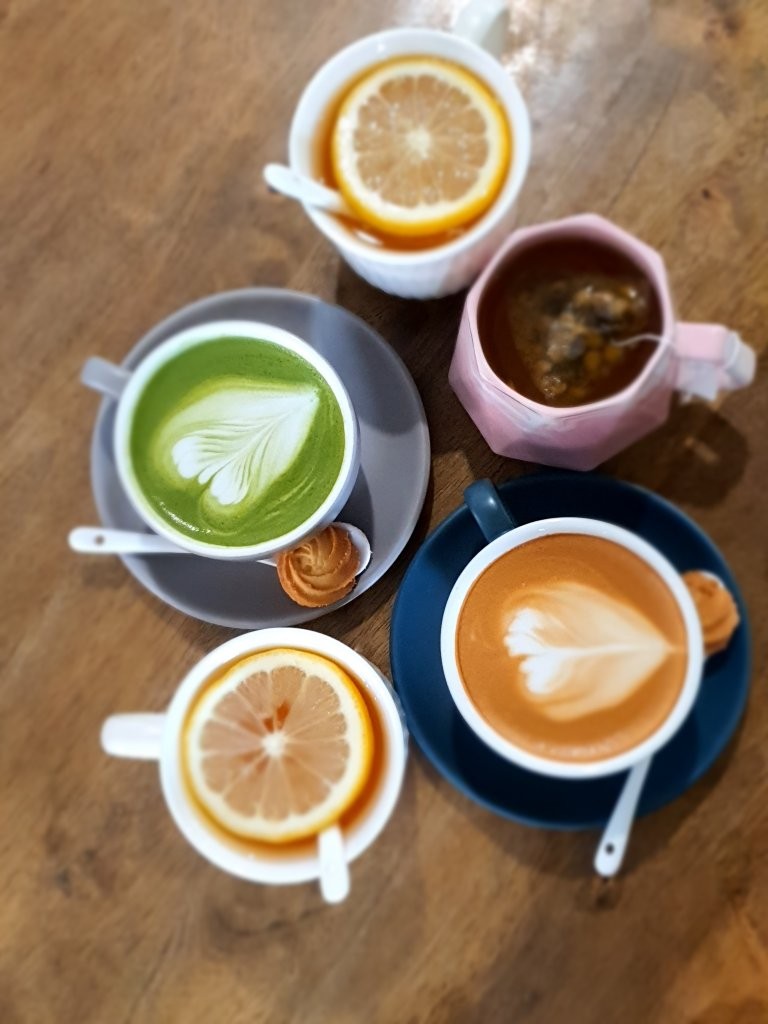
After that intense whiff of kopi-o, tradition, history & heritage, I was ready for my latte fix. To escape the afternoon heat, we popped into a modern cafe with minimalist, stylish decor. We chilled with latte, matcha, specialty teas and cake (belated birthday treat for Wendy).

Amelia Earhart Mural
Occupying the entire side wall of a shophouse on Jalan Abdul Jalil, the Amelia Earhart mural is hard to miss.
At a massive 27.4m by 14.6m, the mural is recognised by the Malaysia Book of Records as the “Biggest Outdoor 3D Mural Painting”. It was a joint effort of six artists, painted over a period of 3 months in 2019.

The mural claims that Amelia stopped to refuel at Taiping Aerodome in Tekah on 20 June 1937 during her solo attempt to fly around the world.
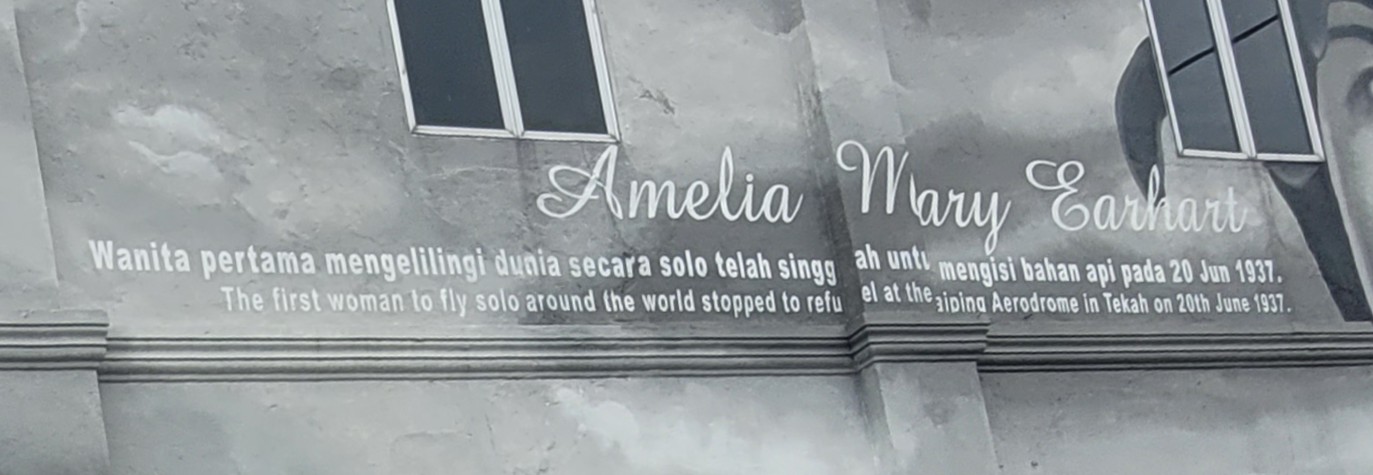
Did Amelia Earhart actually land in Tekah Airport in Taiping?
Based on historical records (flight logs and diaries), Earhart requested for permission to land at the Tekah Aerodrome in Taiping in case she needed to refuel. In fact, similar requests were made to aerodomes at Alor Setar and Penang for the Thailand to Singapore leg of her journey.
As it turned out, Earhart flew non-stop to Singapore, landing at Kallang Airport at 5.23pm. She did not stop in Tekah.
The controversy surrounding this historical (in)accuracy was extensively covered by local dailies shortly after the completion of the mural.
Evidence for / against claim
Fellow blogger Janstu played detective and concluded over 3 blogs that ‘Amelia Earhart never landed in Taiping and had no intention to do so‘. His blog Amelia Earhart & Taiping gives a detailed report that is well supported by news clippings, excerpts from Earhart’s notes and the book ‘Last Flight‘.
Three years later…
Earhart's Taiping mural will not be erased, NST Aug 14 2022.
The mural of American aviation pioneer Amelia Earhart in Jalan Abdul Jalil, Taiping, which has sparked debate after a contradiction of facts, will not be erased.
The article goes on to say that the state government had appointed the Perak State Museum Board as a reference expert to review the factual conflict. A final decision will be made after the report is received.
Deja vu
Three years on, no action has been taken. Did the Perak State Museum Board find proof of Earhart stopping to refuel at Tekah?
On a recent visit to Taiping with two Dutch friends, Janstu once again went into sleuthing mode, this time checking the archives of Dutch (Delpher) and Singapore (NewspaperSG) newspapers.
The irrefutable evidence shared in his blog Amelia Earhart, one more time on 9 October should dispel any lingering doubts on whether Earhart landed in Tekah or not. The mural’s misleading claim needs to be corrected.
Let’s wait and see, though I won’t be holding my breath.
As I did not have time to hike up to Maxwell Hill, we did the next best thing. We had a quick visit to the foothills, going as far as the jeep station.
We also popped into Coronation Swimming Pool that is fed by streams and waterfalls from Maxwell Hill (Bukit Larut). This chlorine-free public swimming pool was built in 1937 by the Taiping Sanitary Board in honour of the coronation of King George VI.
Maxwell Hill Falls
From the foothills, we continued on foot to the water treatment plant.
Following a short trail uphill and into the forest, we first passed the Taiping War Memorial that honors 850 allied personnel killed in World War 2 during the Japanese invasion of Malaya. Separated by the road, the graves on one side are Christian while Muslim & Gurkha graves are on the other side.
Opened in 2023, Maxwell Base Camp is an eco‑tourism / outdoor recreation & conservation project designed to educate the public on flora & fauna, nature preservation and environmental sustainability.
Facilities include camping grounds, hiking trails, exhibition galleries and cafe.

Enroute to the water treatment plant, we passed a Hindu temple that was undergoing construction. Its location is idyllic, tucked away in nature next to a stream.

Opposite the temple, a trail leads up the waterfall and the remnants of a swimming pool built by the British colonizers sometime in the 1900s.
The near vertical waterfall has a series of cascades and a moderate flow.
I enjoyed the lush greenery, forested trail and the occasional overgrown stone bridge (left).


We chanced upon the Amorphophallus konjac (right), currently at the leaf growth phase.
Commonly called konjac, elephant yam, or devil’s tongue, this perennial plant grows from a large corm and follows a seasonal cycle of dormancy, leaf growth, and flowering.
Burmese Pool
The Burmese Pool is a natural rock pool with a series of large pools fringed by rocks. Fed by streams that flow down from the hills of Bukit Larut, the shallow pools are perfect for a refreshing dip while picnicking.

Burmese Pool got its unique name from when the Burma Rifle Regiment discovered and used the pools for recreation in the 1920s.


After crossing a steel bridge that spans the width of the river, we followed the footpath leading up the hills and deeper into the forest. Surrounded by nature, the 2km walk to Bamboo Resort was our second cardio workout that day. dfksdffffffdffrgrfgvv vvvetyytrfdhffffRight pix : Torch ginger


Taiping Eats
Of course, no visit to Taiping is complete without Taiping Salted Coffee and Tau Foo Fah.
I had my first taste of Taiping Salted Coffee at Uncle Chuan Kopitiam. The “salted” flavor comes from roasting or frying the coffee beans with butter / fat, which gives the brew a subtle salty (or “savory”) note, rather than just sweet or bitter.
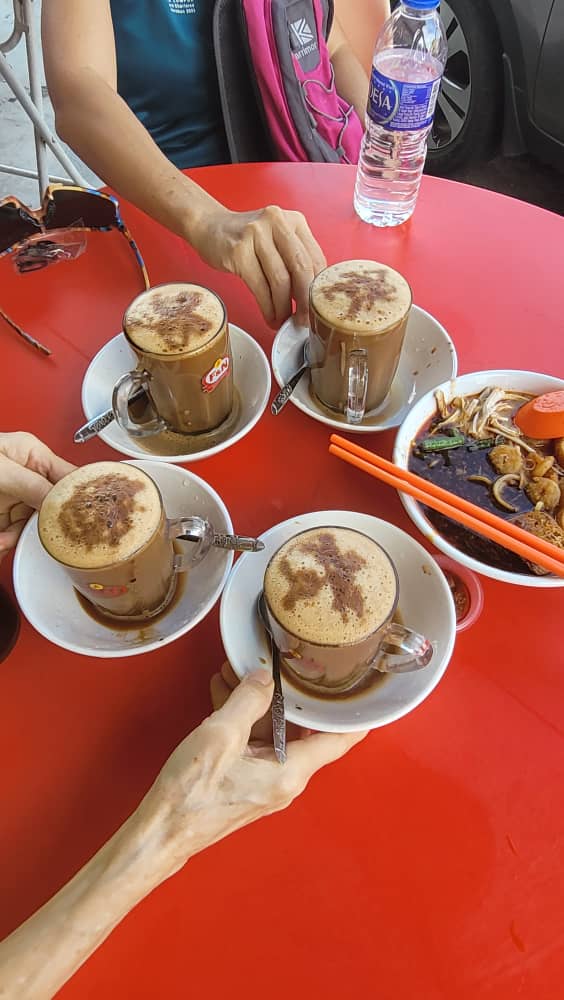

We liked it so much, we went back the next morning, only to discover that Uncle Chuan Kopitiam is closed on Wednesdays.
As for the Chee Cheong Fun at Stall C37, Taiping Food Court and Matang-style seafood porridge …
I’ll be back!
Taiping is a charming historical town in the state of Perak, known for its rich colonial heritage, lush greenery, and laid-back pace. Taiping has the highest rainfall in Peninsular Malaysia, earning it the "wettest town" and "Rain Town" title.

Once the capital of Perak until it was replaced by Ipoh in 1937, Taiping is the second largest town in Perak after Ipoh.
Roadtrip to Taiping
4 August – Papan – a town frozen in time
5 August – Taiping : the ‘Rain Town’ of Perak
6 August – Victoria Bridge, Kuala Kangsar
 phoenixtrails.home.blog