
Following the discovery of coal in the 1890s, the sleepy settlement of Karai was transformed into a coal mining hub. Recognising its economic importance, the British facilitated the town’s rapid development through infrastructure improvements.
When the pontoon bridge used to transport coal across the Perak River was washed away by a huge flood in 1897, the solution was to build a bridge that stretches over the river high enough to avoid the overflowing waters, to safely transfer the coal to the other side.
6 AUGUST 2025
Before setting off for Kuala Kangsar, we had breakfast at the Larut Matang Hawker Centre, followed by the obligatory shopping spree for traditional biscuits such as heong peng and tau sar pau.
Our mission today was to see the oldest railway bridge in Malaysia.

We knew we had arrived when we saw the ENGGOR station name-plate and platform area just before the bridge.
Victoria Bridge (Jambatan Enggor)
Located at Karai / Enggor in the Kuala Kangsar district, Victoria Bridge is a single track railway bridge that spans the Perak River, connecting Kampung Warisan Budaya (east) and Kampung Seberang Karai (west).
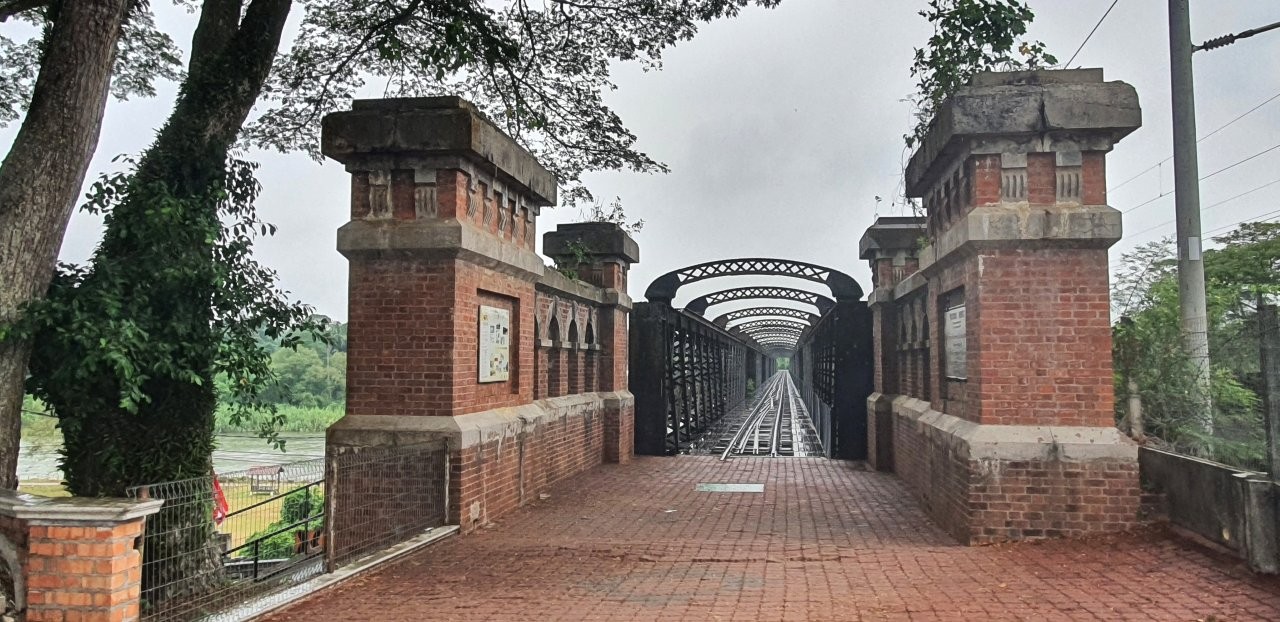
Victoria Bridge was constructed between December 1897 and March 1900 by the Perak Government Railway as part of the expansion of the railway network to facilitate the transport of natural resources from the north to export points in the south.

Architectural Heritage
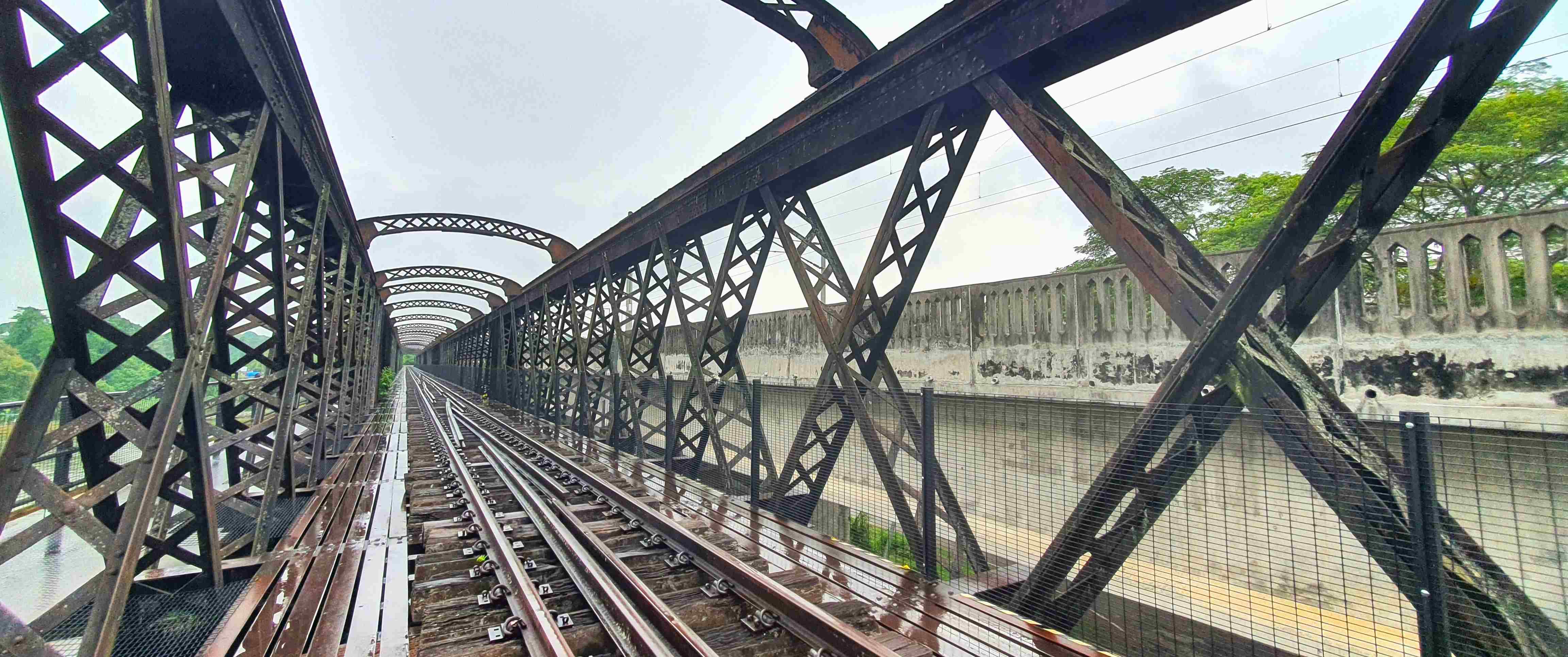
As one of the oldest surviving railway truss bridges in Malaysia, Victoria Bridge features the rare double-intersection Warren truss design as its superstructure. Constructed completely with steel beams, the structural framework is made up of equilateral triangles that distributes weight evenly across the span.
Warren truss design characteristics :
– repeating pattern of diagonal beams forms triangles along the span
– double intersection creates an “X” inside each panel
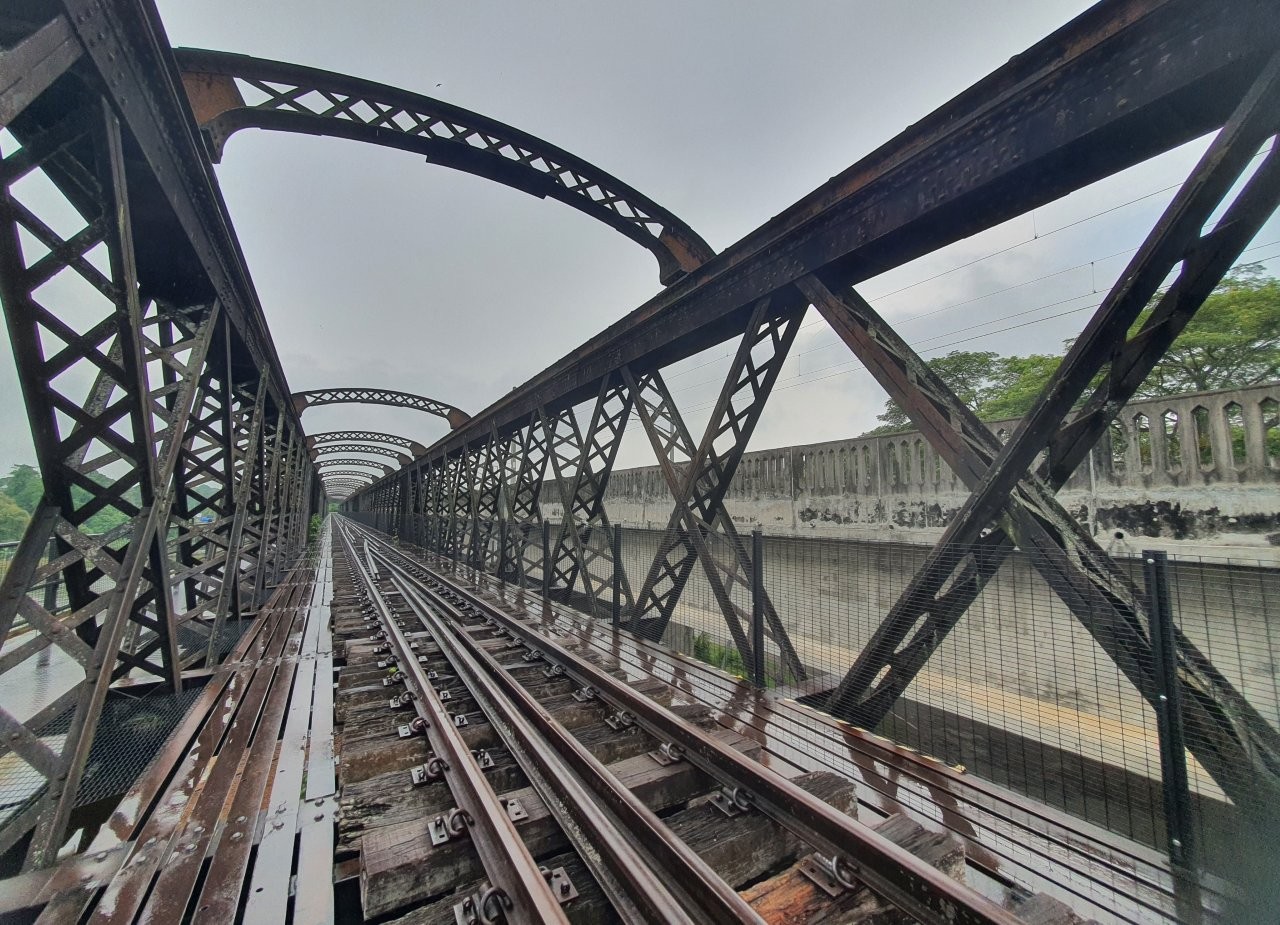
The superstructure rests on six masonry/brick piers set into foundations deep enough to withstand river currents and flooding, rising 12meters above the water line.

This bridge was fully functional for 102 years (1900-2002).
- Length : 353m
- Width : 3.6m
- Height : 12m
- Piers in water : 6
- Elevation : 12m
- Design : Double-intersection truss bridge
- Engineers : GW Fryer, CR Hanson
- Construction Cost : $325,000
- Opened : March 1900
- Closed : 2002

Victoria Bridge remained in use until 2002, when it was replaced by a modern, wider bridge running alongside it. Thereafter, the new double-track girder bridge handled all rail traffic.
Today, villagers use the footpath to cross the river either on foot or motorcycle.
No trains, just footsteps
You don’t walk on Victoria Bridge. You step into the history of a 125 year-old monumental steel structure where trains no longer thunder – only the footsteps of curious travelers.
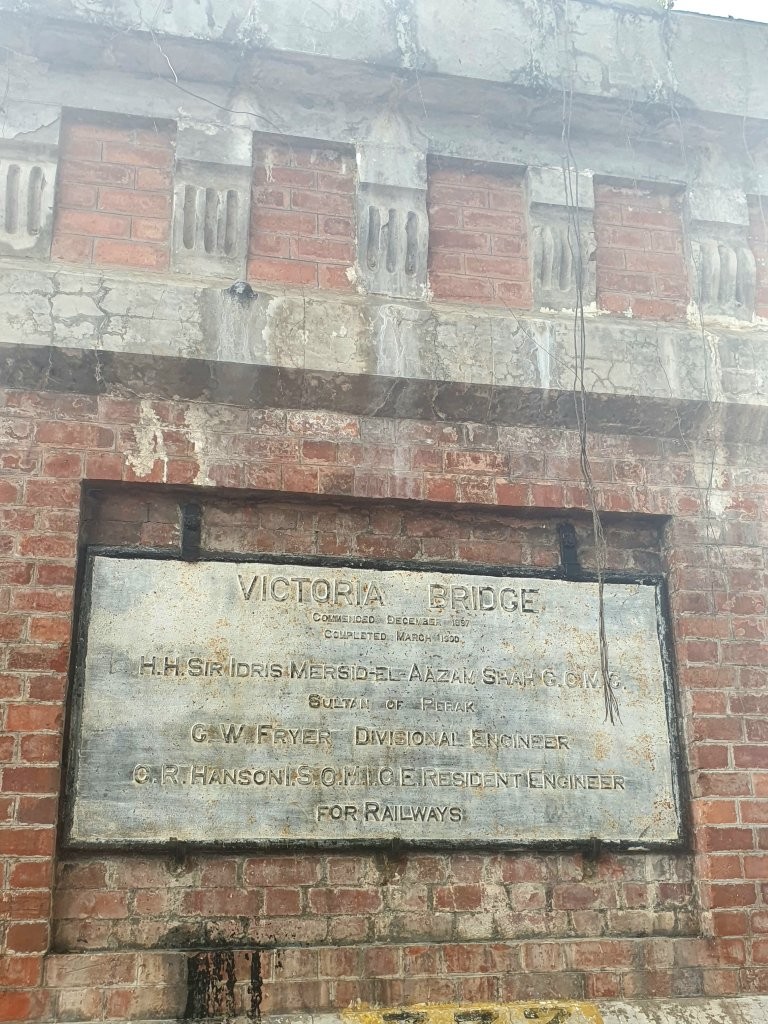
A faded plaque commemorating the opening of Victoria Bridge over a century ago, captures the nostalgia of bygone days and timeless journeys.

To experience the quiet power of steel and silence, I strongly recommend walking along the tracks, but be mindful of gaps. Alternatively, the footpath is more sturdy, just watch out for motorcycles coming from either direction.
Industrial Relic to Photographer’s Paradise
This huge steel bridge is not just about holding up trains — it’s an art piece. Those repeating triangles and strong beams make awesome geometric patterns & leading lines that are a dream to shoot.

I could not resist experimenting from various angles and directions. It’s almost impossible to get a bad shot here. That’s the enduring legacy of this 19th century engineering feat.
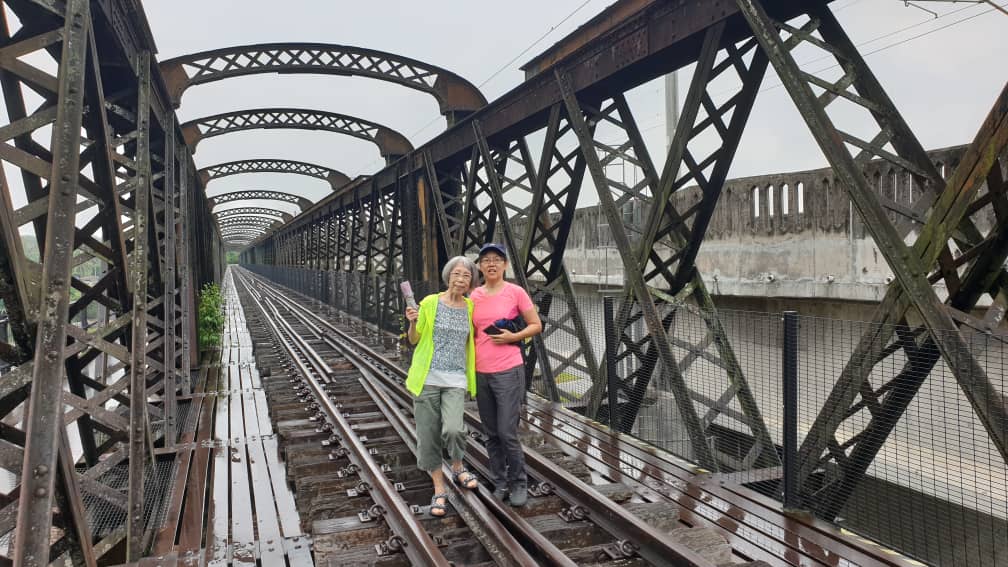
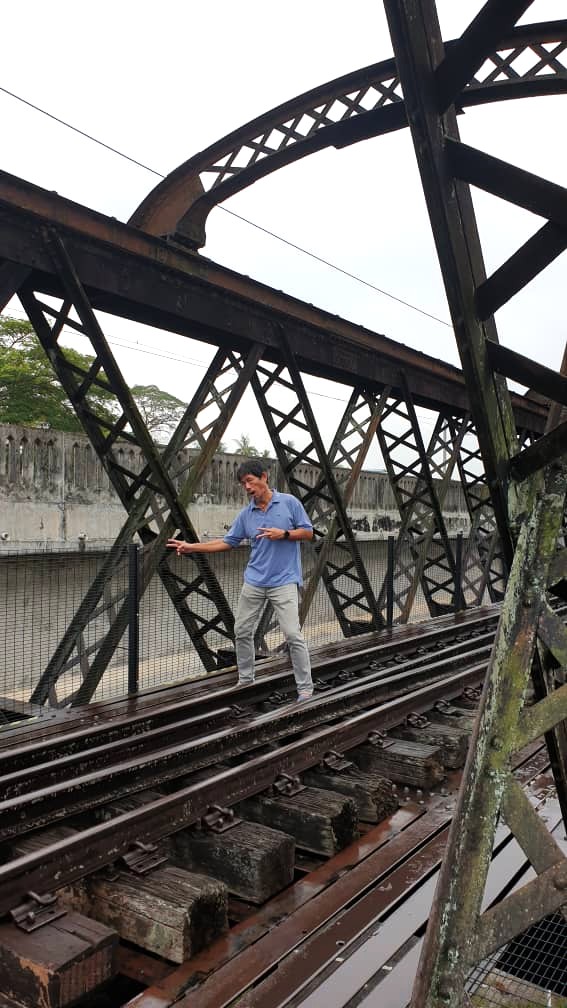
Crossing Victoria Bridge is more than just walking over a river – it is a journey through a timeless corridor suspended between past and present.

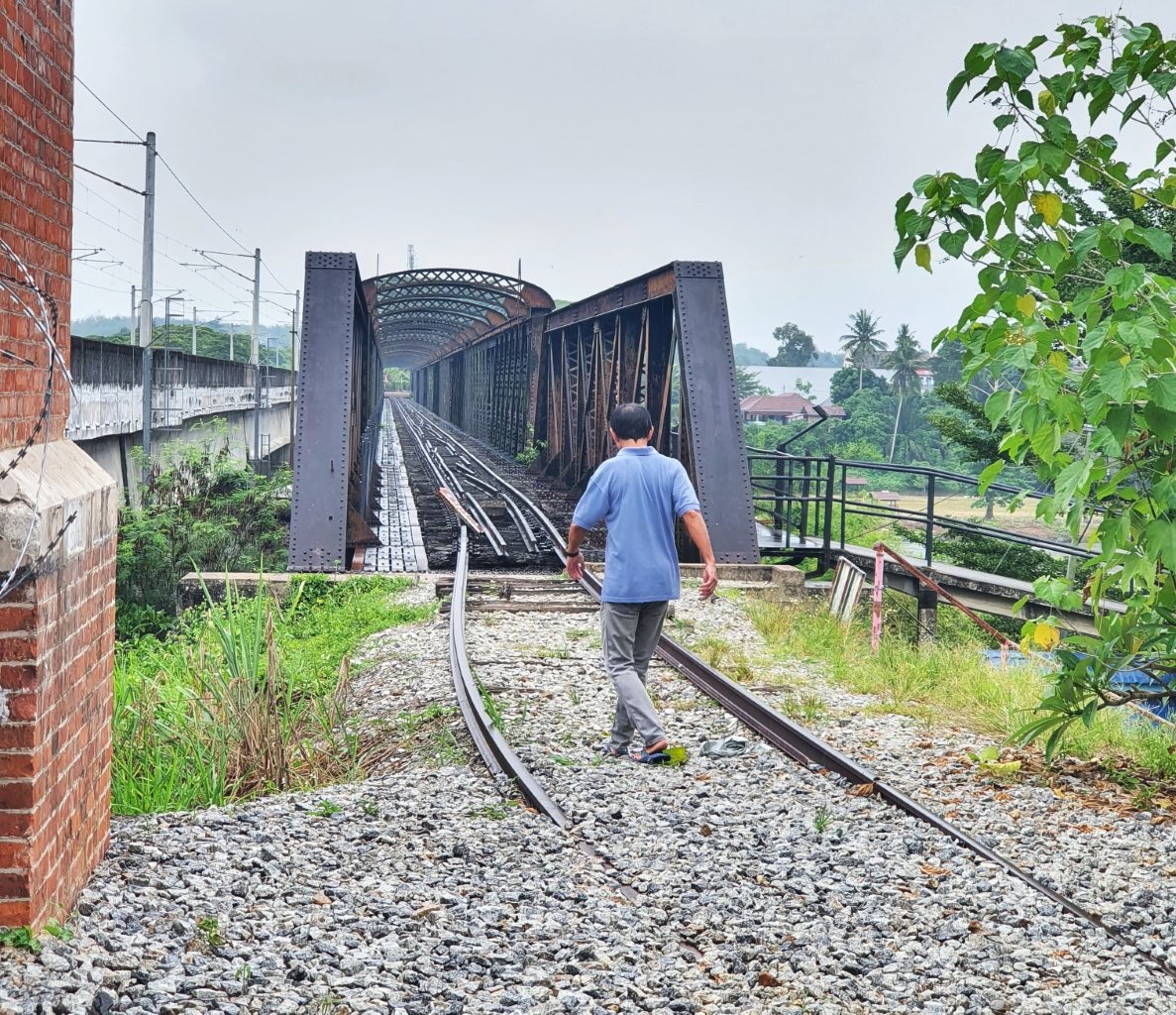
(left) Enggor end fghjkkkkkkkkkfghjk (right) Karai end
The path to the riverbank was another fun discovery, starting with a spot directly under the bridge.
Classic Heritage Corner
Nestled under the bridge is an impressive collection of household items and farming / plantation tools from the 1900s. Items displayed include a sewing machine, coffee grinder, coconut grater, ice shaver, weighing scale, coal iron, saw, buffalo plough, rubber latex barrel, etc.

A patch of lush greenery later, we emerged at a viewpoint with Victoria Bridge in the background. These unexpected little touches, together with the misty rain and overcast sky set the stage for some mood photography.
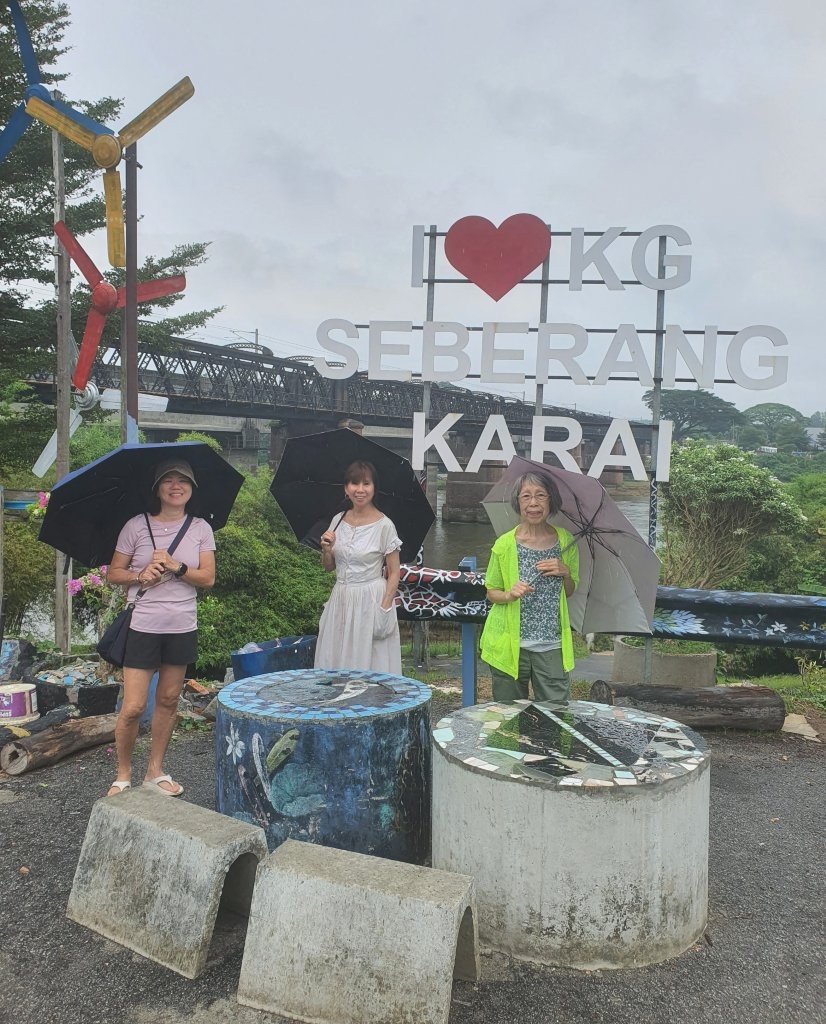
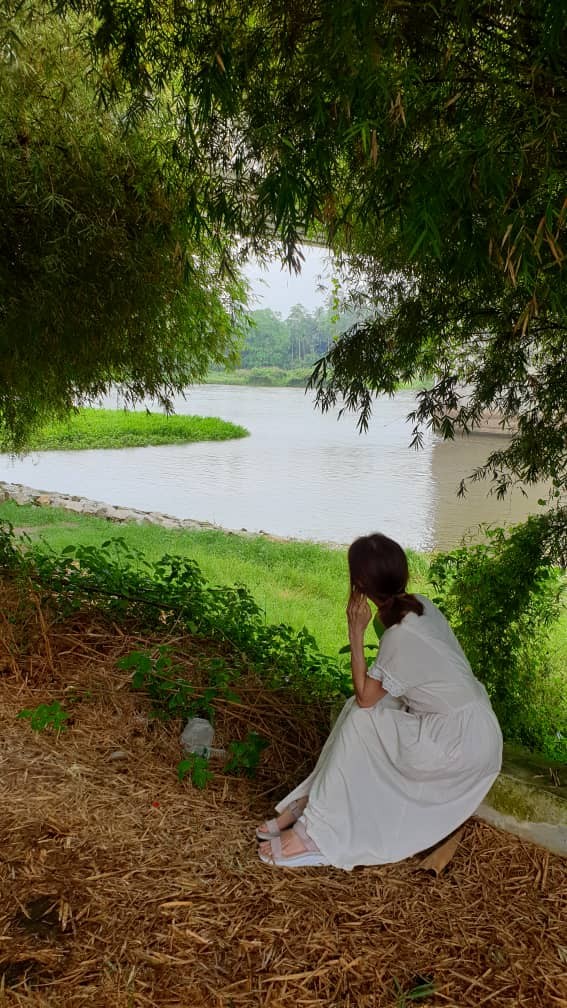
Wendy made full use of the soft light, saturated greens and a pensive Joyce to evoke a nostalgic shot.
Old vs New
Finally at the water’s edge, the massive red brick column stands sturdily beside the 23 year-old concrete pillars of the new bridge.


When all rail activity ceased in 2002, Victoria Bridge was left abandoned and overgrown until 2013. Luckily, its tourism heritage potential was realised, initiating clean up efforts to make it a tourist attraction.

Victoria Bridge was declared a National Heritage Site under the Department of National Heritage Malaysia in 2016.

Located in Karai, approximately 10km southeast of Kuala Kangsar town centre, Victoria Bridge was historically part of the Perak Railway line, linking Taiping → Enggor → Kuala Kangsar → Ipoh.
Istana Kenangan (Palace of Memories)
Istana Kenangan may have been built as a temporary royal residence in 1926. Today, it captivates all who visit with its distinctive architecture.
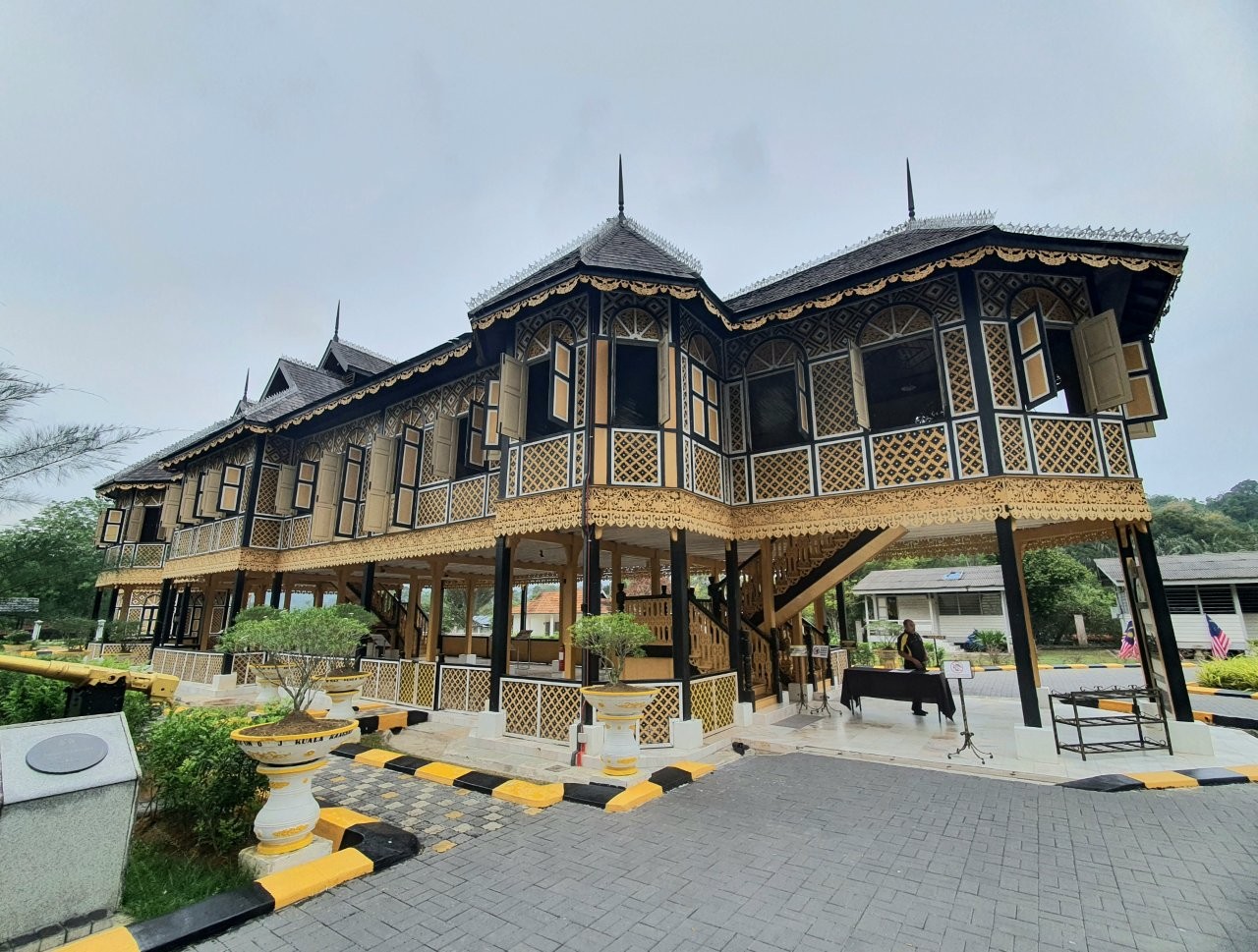
Completed in 1931, it served as the official residence of Sultan Iskandar Shah up till 1933, while the construction of the new palace ‘Istana Iskandariah‘ was underway. The old palace ‘Istana Negara‘ was demolished.
Heritage Gem
Showcasing traditional Malay craftsmanship, Istana Kenangan is a beautiful wooden structure by carpenter Haji Suffian and his two sons from Seberang Perai.
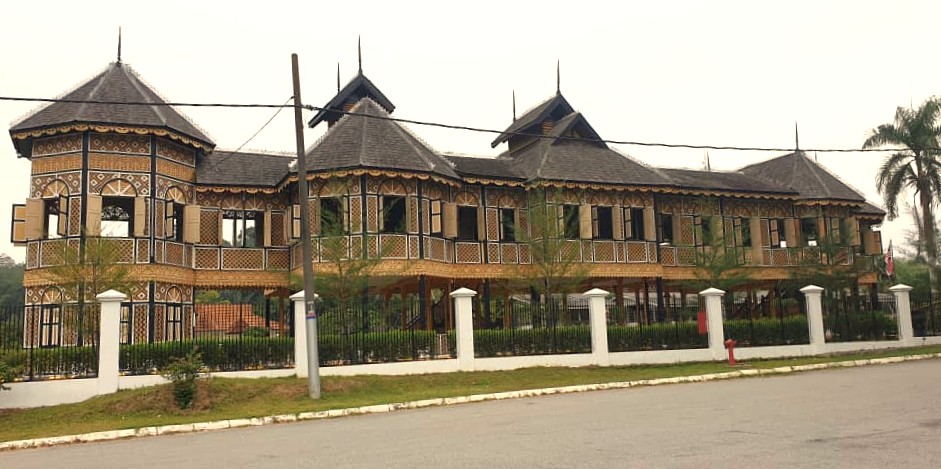
The distinctive roof design uses the combined styles of the five ridges (perabung lima) and banana cluster ridge (perabung pisang sesikat).
The 2-storey palace was constructed using carefully selected hardwood with woven bamboo panels and a ‘belian wood’ roof.
The ground floor is enclosed with lattice screens.
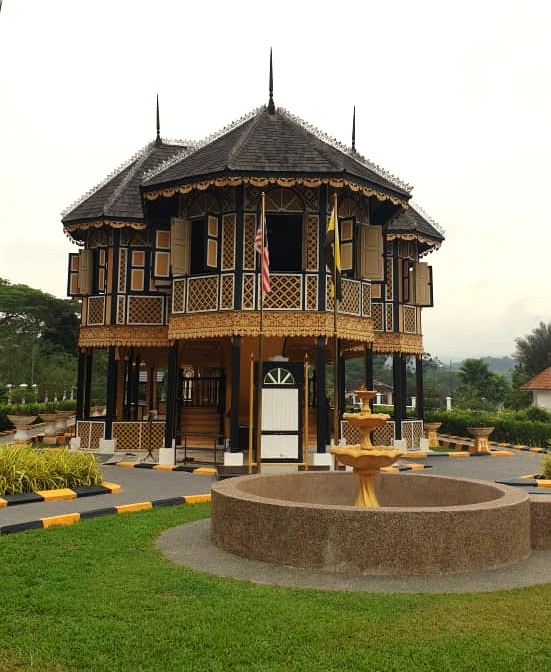
The building rests on 60 pillars, measuring approximately 41 meters in length and 11 meters in width.

What’s even more impressive is that not a single nail was used in the construction. Instead, the structure is held together by the traditional technique of mortise and pegs.

Bold, geometric elegance
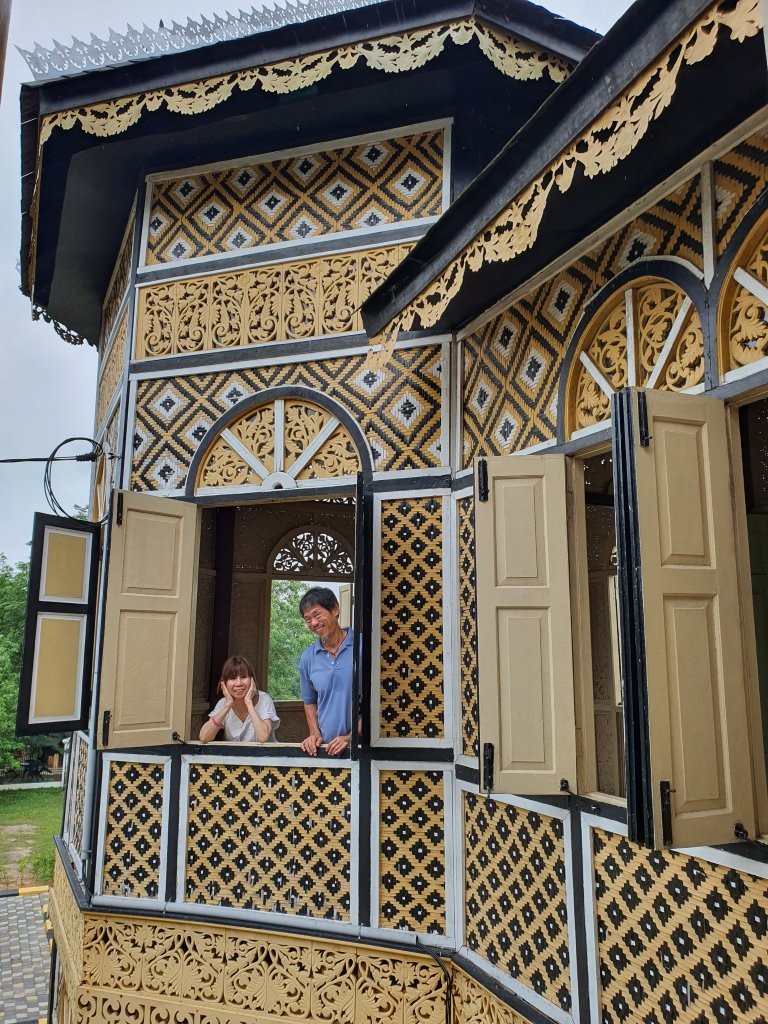
The exterior is decorated with intricate woven bamboo patterns, arranged in striking black and white diamond-shaped plaits ‘kelarai‘, embodying the artistry and skill of Malay carpenters.
With its alternating black, white, and yellow woven bamboo panels, the façade symbolises the royal colors Perak.

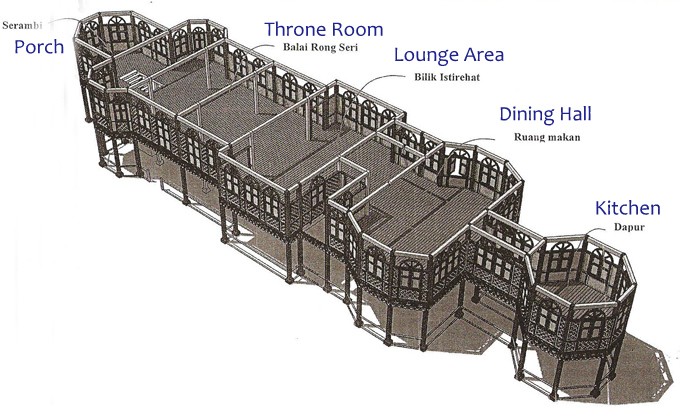
From above, the palace is designed to resemble a ‘kris‘ (Malay dagger) sheathed in its scabbard. The Sultan’s bedchamber is located at the handle, while the throne room ‘Balai Rong Seri‘ is at the scabbard.
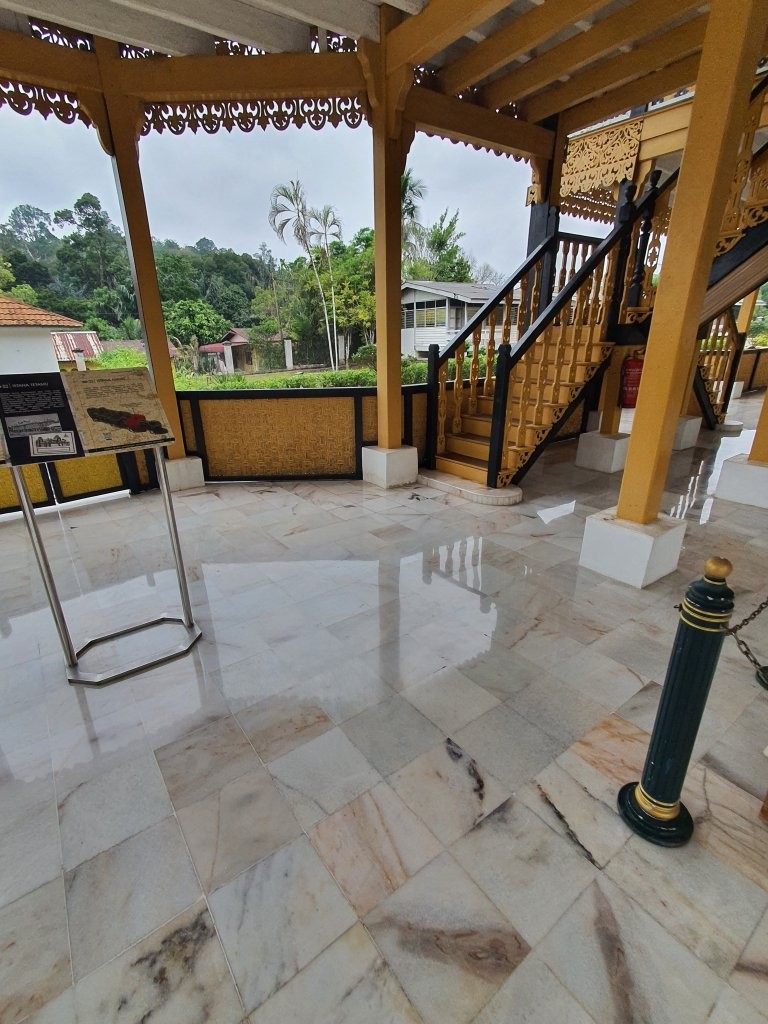
The ground floor was once used as the royal office. Its original solid wood floor has been replaced with marble.
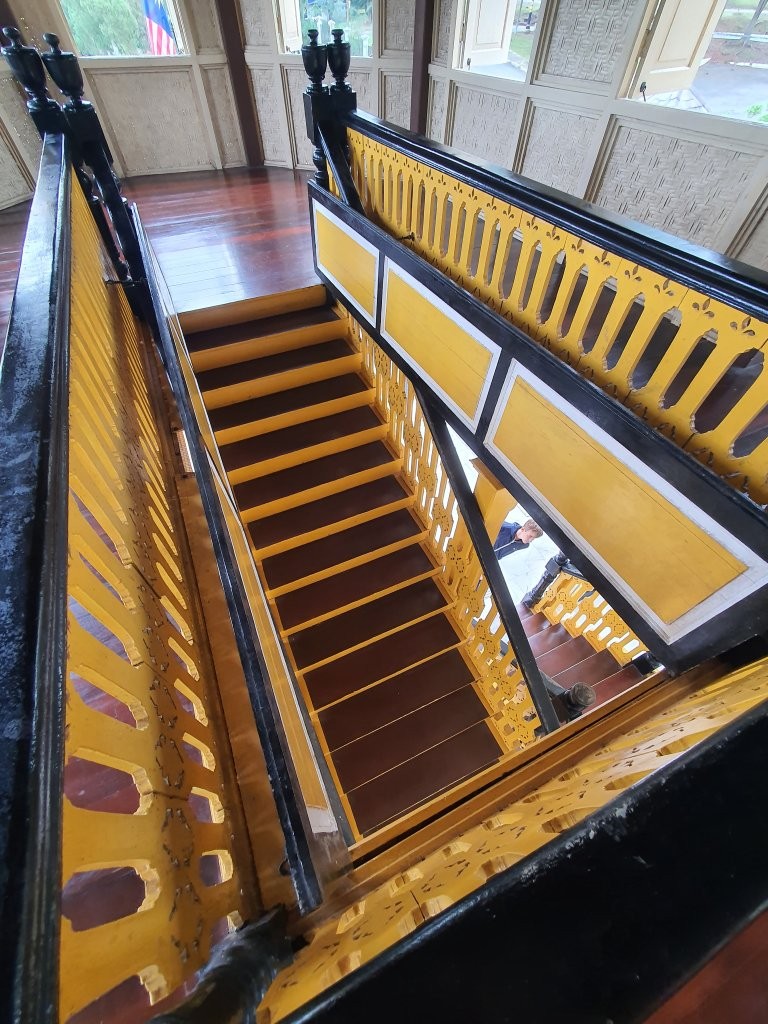
The upper floor consists of the royal bedchamber, family bedrooms and dining hall.

The staircase leads immediately to the ‘Balai Rong Seri‘ that occupies the central portion of the upper floor.
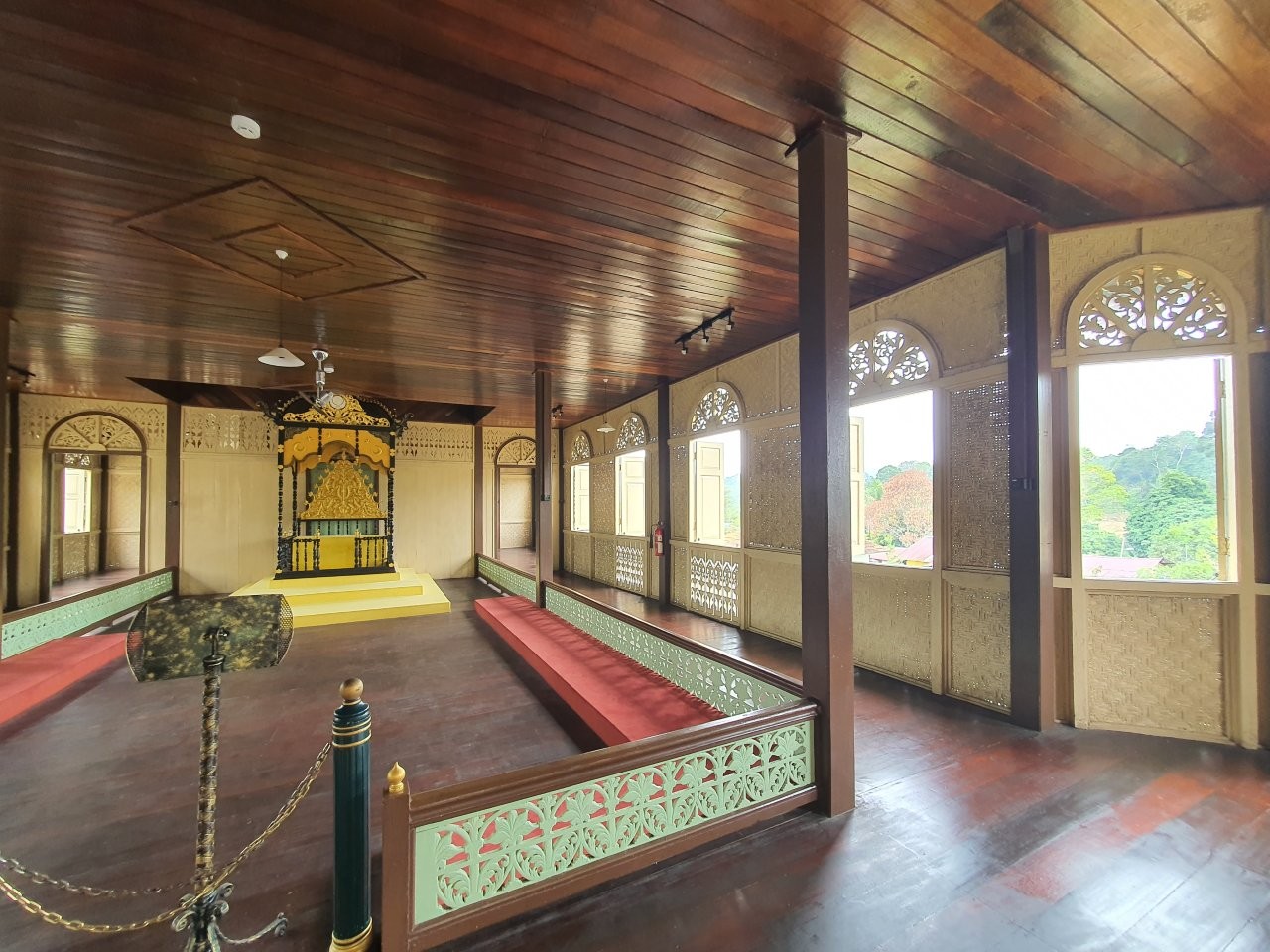
A resplendent yellow throne ‘singgahsana‘ takes centerstage.
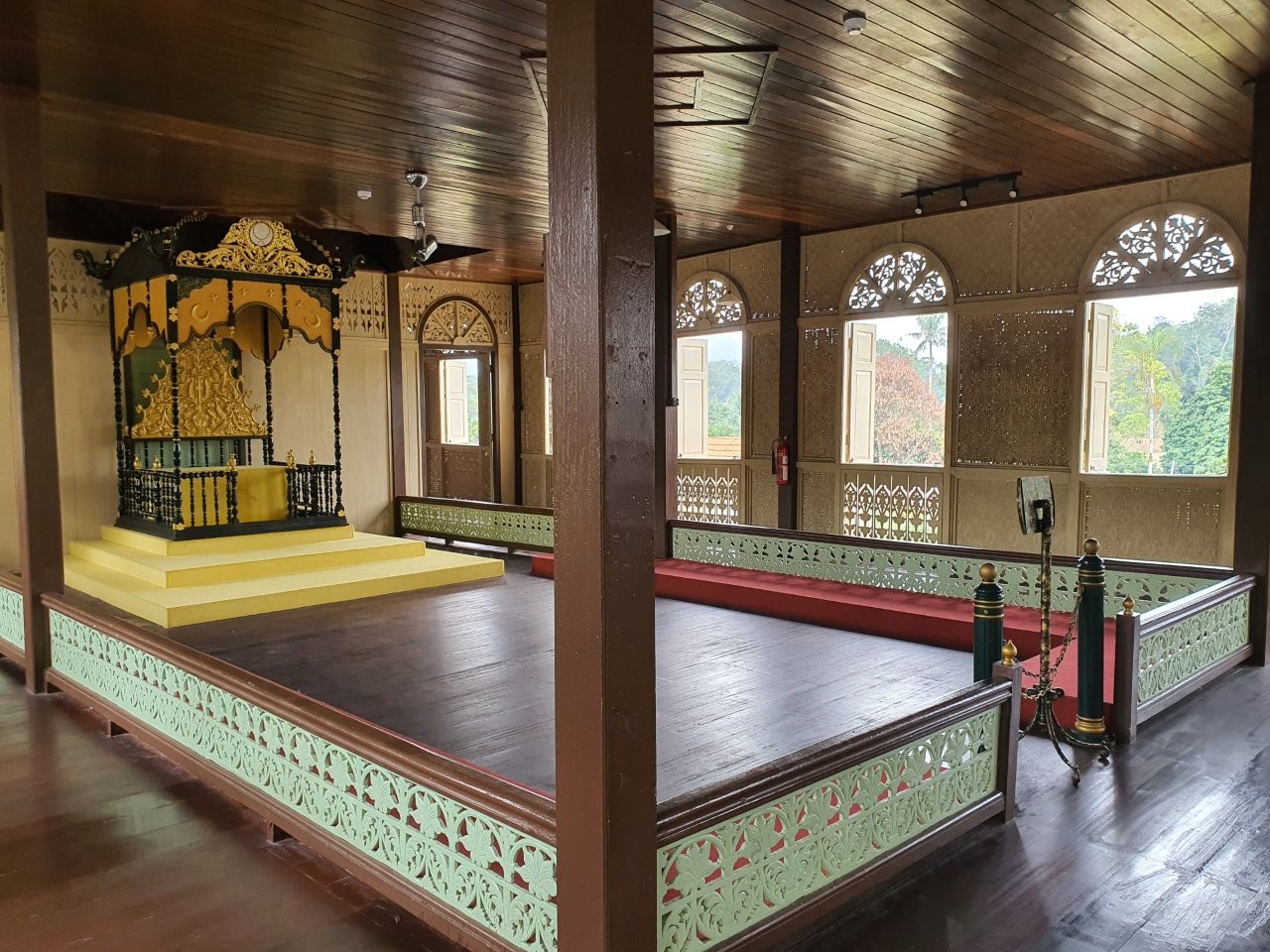
Behind it is the dining hall, where the royal family had their meals. There are also three bedrooms with stunning window views.


Following the completion of Istana Iskandariah, the Sultan returned to his official residence.
Istana Kenangan was designated as the Guest Palace – to host royal receptions and palace guests, especially during royal celebrations such as birthdays, the appointment of Perak dignitaries, and other royal ceremonies of Perak. It was also used as a stopgap mausoleum for members of the royal family awaiting burial.
In 1986, Istana Kenangan was restored and converted to house the Royal Museum of Perak. Open to the public, exhibits include royal artifacts, regalia, and personal belongings of past Sultans. The museum has since relocated to Istana Iskandariah.
Istana Kenangan was declared a National Heritage Building under Malaysia’s National Heritage Act 2005.
Kuala Kangsar is one of Malaysia’s most historic and culturally rich royal towns. Known as the Royal Town of Perak, it has been Perak's royal seat since the 18th century - the center of royal administration and ceremonial life for the Sultanate of Perak. The Sultan of Perak officially resides in Kuala Kangsar.

Kuala Kangsar is approximately 48 km north of Ipoh, located on the confluence of the Kangsar and Perak Rivers.
Roadtrip to Taiping
4 August – Papan – a town frozen in time
5 August – Taiping : the ‘Rain Town’ of Perak
6 August – Victoria Bridge, Kuala Kangsar
 phoenixtrails.home.blog