
After a 5-hour bus journey from Podgorica, I got into Dubrovnik just after noon. My decision to stay close to the old town, though more costly, was justified. Over the next 3 days, I was able to fully explore the old town’s rich history, churches, monasteries and cobbled streets numerous times and at different hours of the day.
16 – 18 SEPTEMBER 2024
Dubrovnik’s Old Town is a well-preserved medieval city located in southern Croatia. This coastal city is famous for its old-world charm, medieval architecture, cultural landmarks, spectacular sea views, and nearby island excursions.
A UNESCO World Heritage Site since 1979, the Old Town is famously referred to as the “Pearl of the Adriatic.”
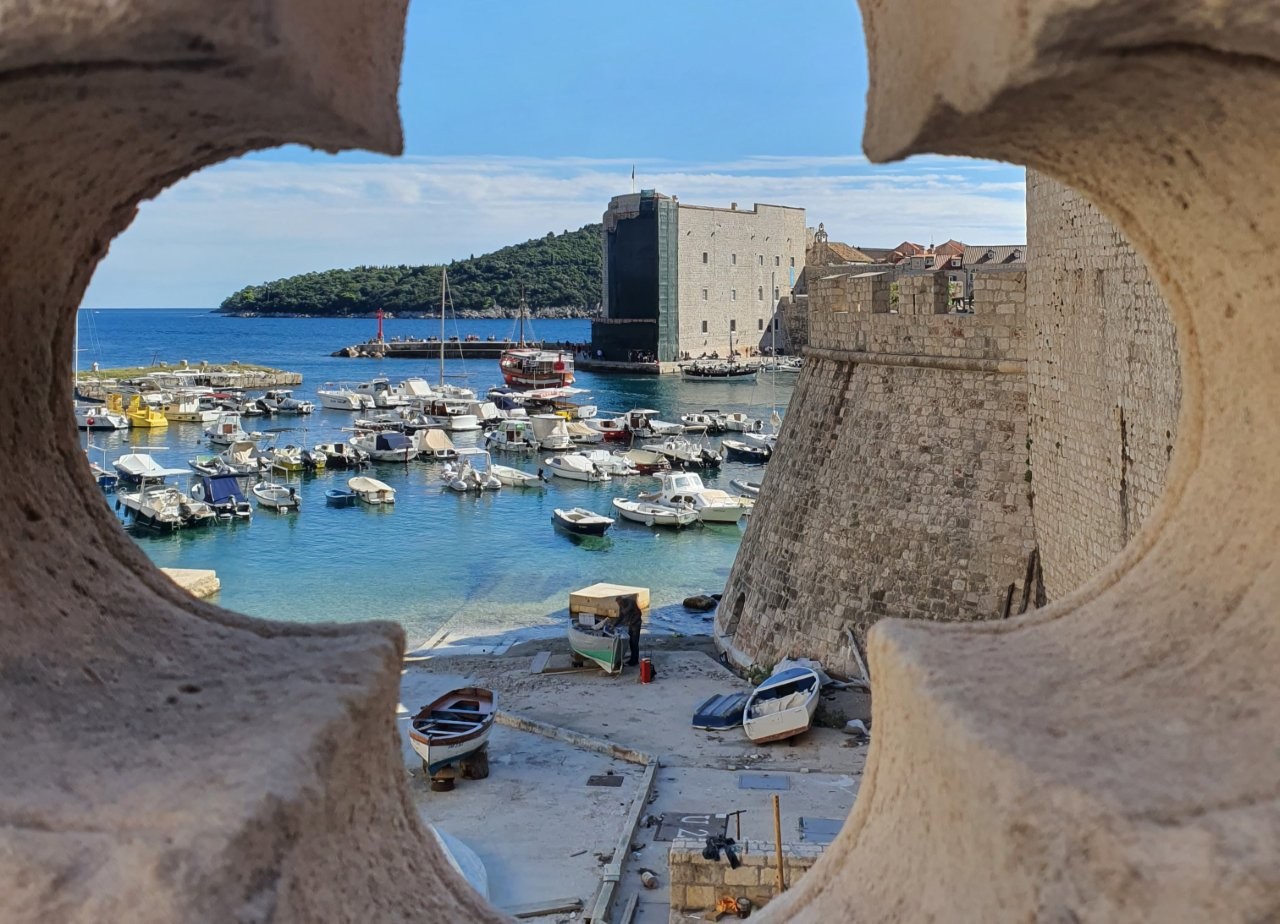
Small and compact with a population of 40,000 only, Dubrovnik’s Old Town is no less vibrant and remarkably easy to get around, if you don’t mind the thousand-odd steps climbing through history.
According to The Dubrovnik Times, the entire Old Town area, has a total of 5,423 stone steps that includes
- around 4,343–4,353 steps within the streets and alleys of the Old Town itself
- 1,080 steps on the City Walls walk (the staircases climbed to explore the fortifications above the town)
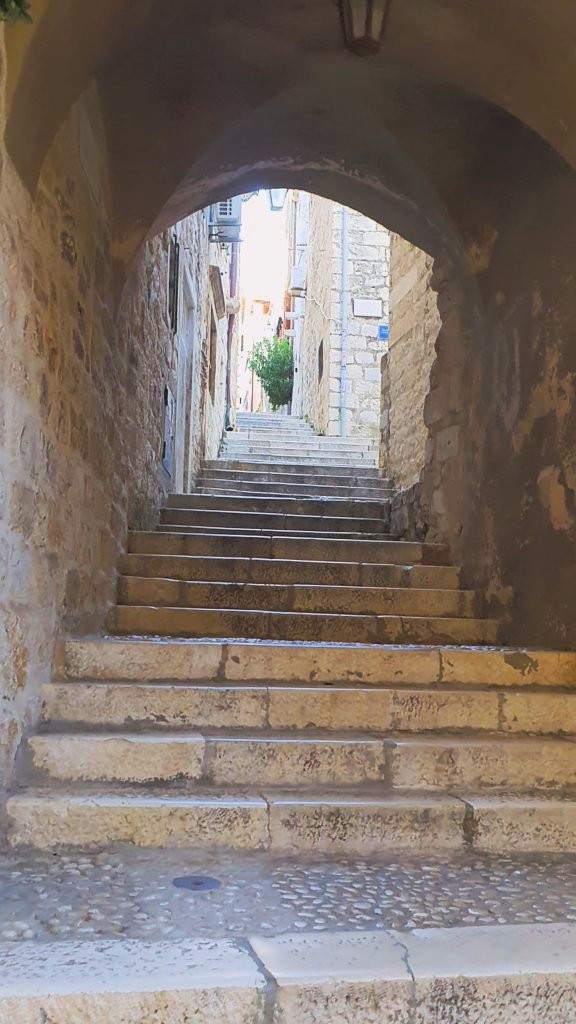

Entry to the Old Town is free with a complimentary ‘Bum and Thigh’ workout. Some museums and buildings charge a fee.
I got the one-day Dubrovnik Pass (EUR 35) for entry to the City Walls, Fort Lovrijenac, and Rector’s Palace as well as a bus ride to the main bus station.
The Dubrovnik Pass grants access to the main sights, plus free bus tickets and discounts in shops and restaurants. Depending on whether you go for a one-, three- or seven-day card, it'll include entry to the city walls and museums (Rector’s Palace, Franciscan Monastery), as well as discounts for Lokrum and Mljet Island.
Pile Gate
Located on the western edge of Dubrovnik’s Old Town, Pile Gate is the busier entry point to the pedestrianised old city, blending Gothic, Renaissance, and Baroque architectural styles.

The imposing outer gate was built in 1537, while the inner Gothic gate dates back to 1460.
With layered defenses similar to Ploce Gate, it has a statue of St Blaise watching over arrivals.
Up until the 19th century, the gate was locked and drawbridge raised nightly, to secure the city. The 15th century wooden drawbridge that crosses over a moat has since been replaced by a stone bridge.
Onofrio’s Large Fountain
Just inside Pile Gate a giant, circular domed structure made by Italian builder Onofrio della Cava in the 15th century, captures the eye.
Completed in 1438, Onofrio’s Large Fountain served as the city’s main public water point, fed by a 12km aqueduct from the Rijeka Dubrovačka springs.

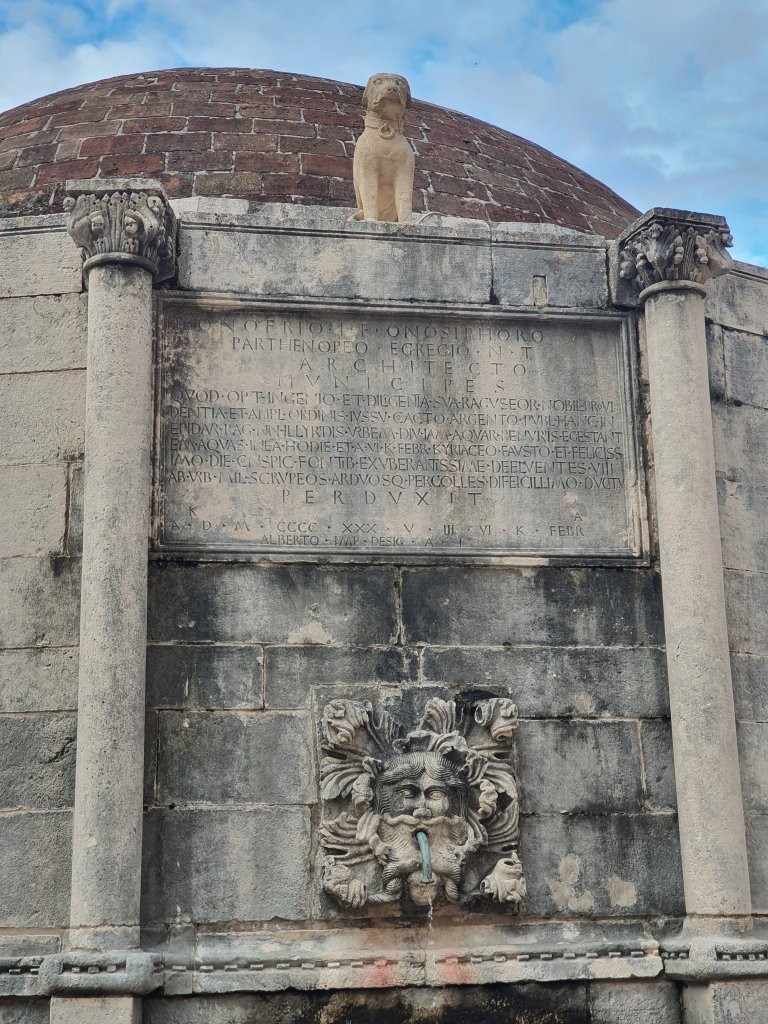
Each of the fountain’s 16 sides is lavishly decorated with expressive maskerons (carved-stone masks) with a spout coming out of it. The fountain’s water is potable and comes directly from the city’s water network.

Must-do local tradition: Pause at a fountain spout, let the water run clear for a moment, then top up your water bottle.
Stradun (Placa)
The Stradun is the main thoroughfare that cuts through the heart of the Old Town. This bustling street serves as a central spine connecting most of the city’s main attractions and historical landmarks.
From the expansive Onofrio’s Large Fountain to Sponza Palace, this 300m smooth, marble-like esplanade effectively links Pile Gate in the west to Ploče Gate in the east.
Following the devastating 1667 earthquake that destroyed most of the buildings, the Old Town was rebuilt in a clean, harmonious Baroque style.
Subsequent damage by mortar shelling during the Siege of Dubrovnik in 1991–92 has since been repaired.

Paved with gleaming white limestone, polished by centuries of footsteps, the Stradun is lined with charming boutiques, open-air cafes at street level, with a couple of small yet captivating museums tucked discretely behind the polished stone arcades.
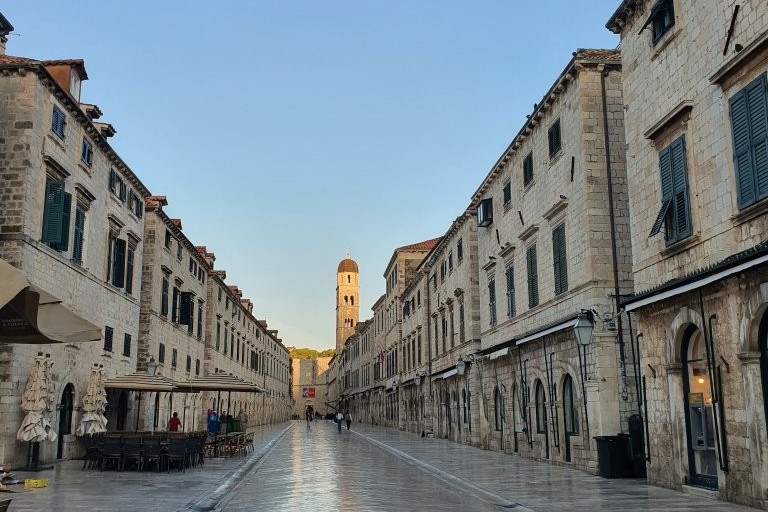

Besides elegant historic façades, the 17th-century baroque streetscape invites visitors to explore and discover alleyways filled with eateries, small shops and lively bars.
Come nighttime, it takes on a whole new vibe — a place for evening strolls, festivals, and the daily rhythm of local life.
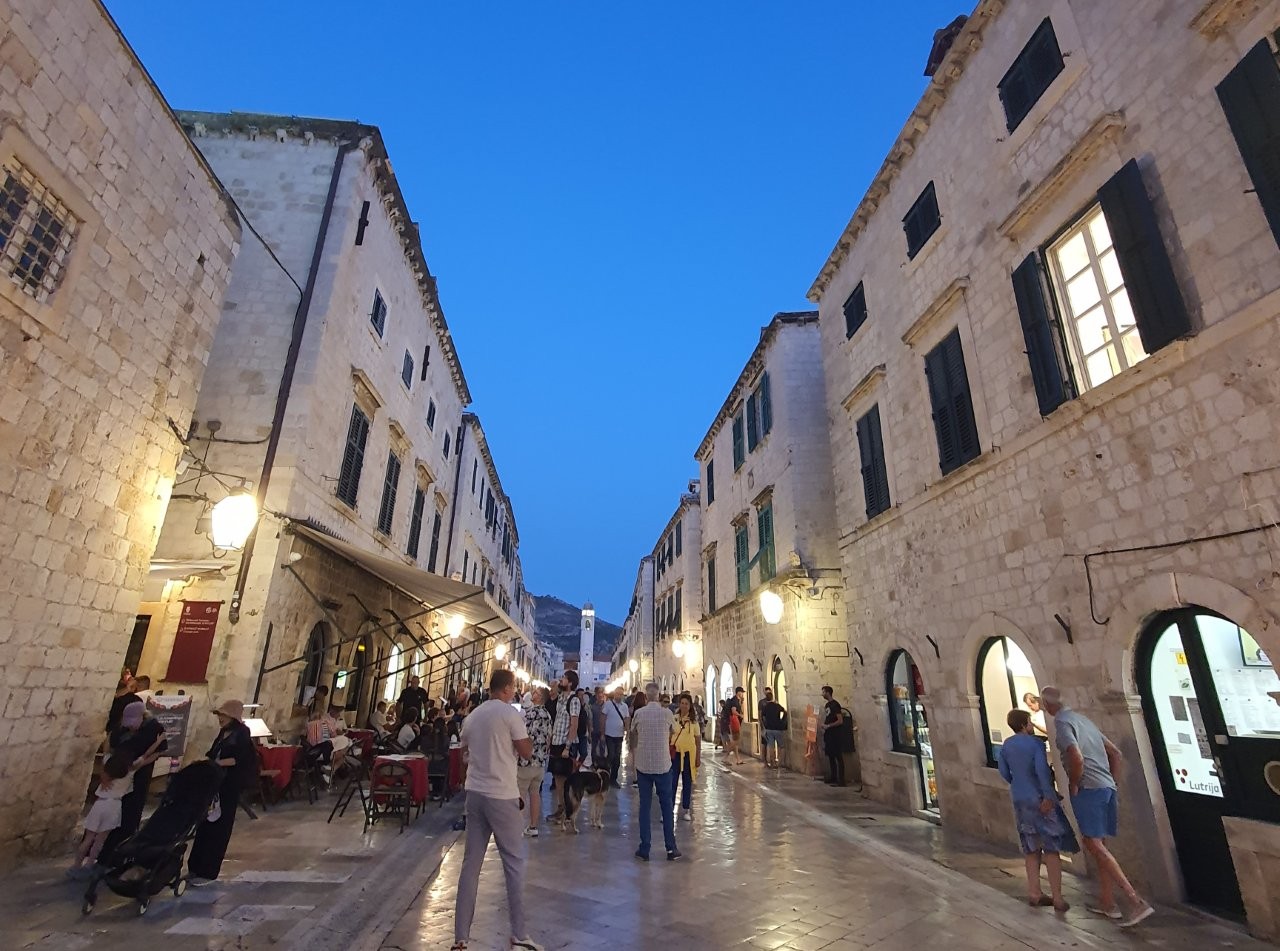
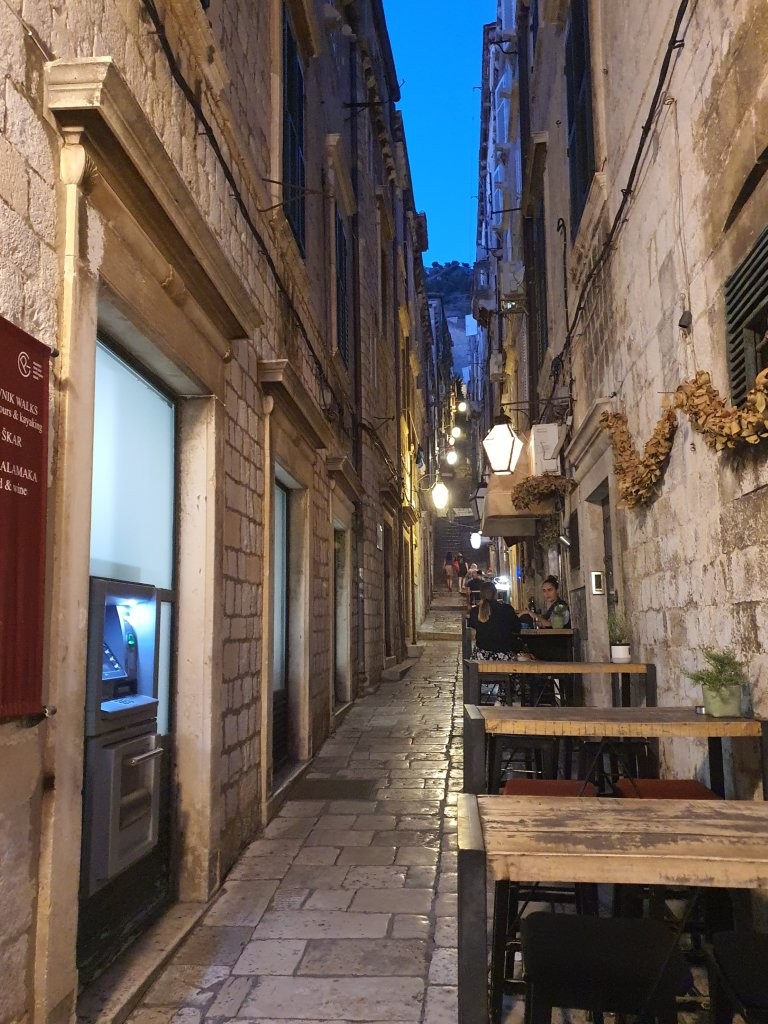

Fun Fact : The Stradun used to be a shallow sea channel – it was filled in during the 12th century, creating the city as you see it today. It is also a filming location for Star Wars Episode VIII.
Luza Square & Clock Tower
Luža Square, at the eastern end of Stradun, is one of Dubrovnik’s busiest and most historically significant central squares. Since the Middle Ages, it has been a central meeting place for citizens of the Republic of Ragusa, present-day Dubrovnik.
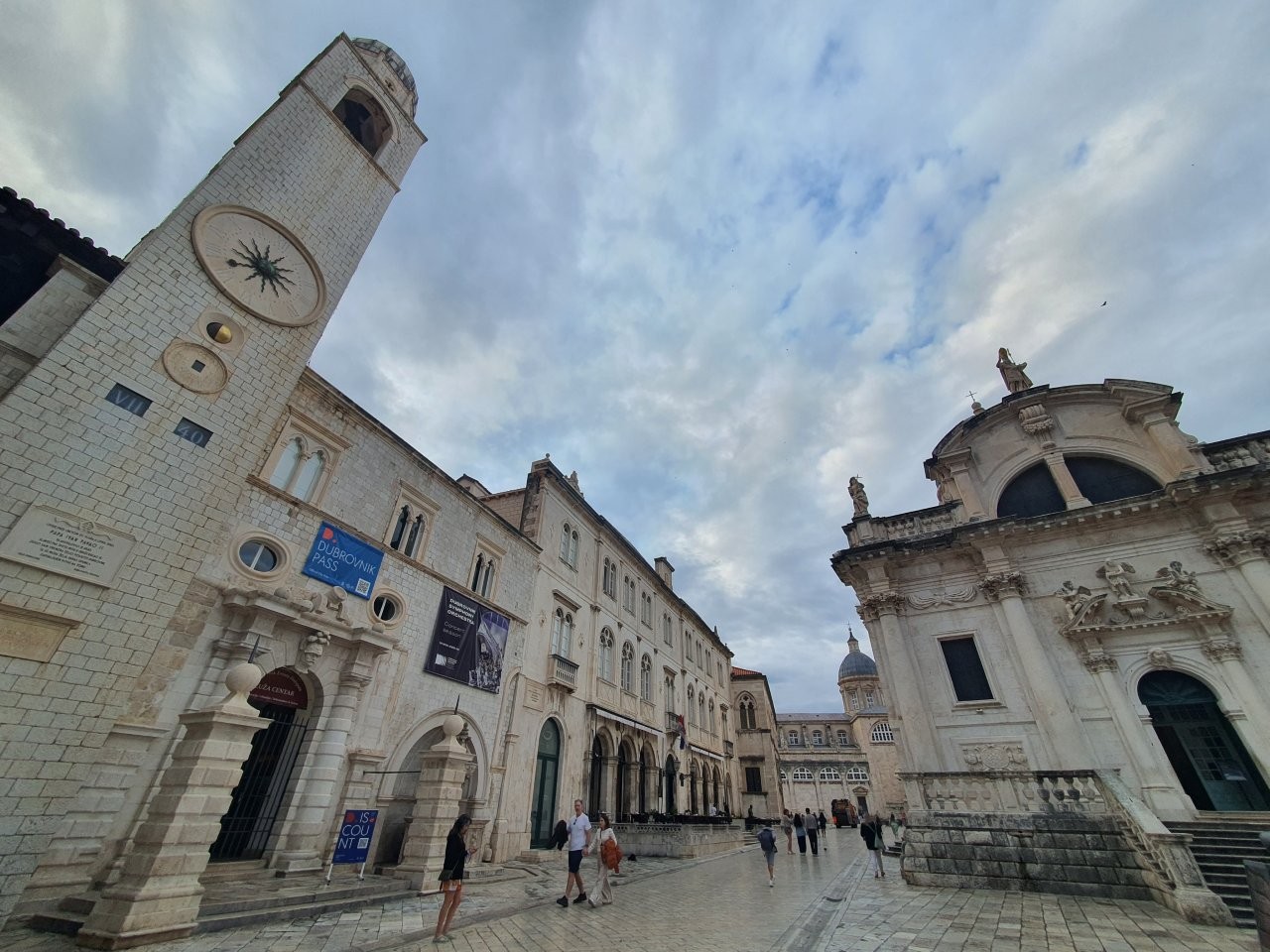
The most prominent landmark on Luza Square is Dubrovnik’s 31m tall clock tower. First completed in 1444, then severely damaged in the 1667 earthquake, it was carefully rebuilt in 1929, preserving its original silhouette.
“Baro” and “Maro” are two bronze figures on either side of the great bell at the top. Holding mallets, these bronze jacks strike the bell, marking each hour with a rhythmic clang that echoes down the Stradun.
Fun Fact : After centuries of being exposed to the salty air of the Adriatic, Baro and Maro had turned a strange shade of green, which gave the two men their famous nickname of Zelenci or “Green Men”.

Believed to have been created in 1478, they remained on the city bell tower until their removal in 1905. First exhibited in Sponza Palace, the “Green Men” are now permanently on display at Rector’s Palace following extensive renovation works in 2004-2009.
Church of St. Blaise
Another iconic and famous landmark in Dubrovnik is the Church of St. Blaise, sitting at the site of the older Romanesque church that was destroyed in a 1706 fire. Dedicated to Saint Blaise, the patron saint of Dubrovnik, the ornate baroque church dates back to the early 18th century.
Built by Venetian architect Marino Gropelli from 1706 till 1715, the church’s facade is adorned with multiple statues of angels and decorative elements.

A statue of Saint Blaise watches over the church from the top. He holds a model of Dubrovnik, which symbolizes his role as protector of the city.

The interior is intimate comprising of marble altars and a 15th-century silver gilt statue of St Blaise holding a scale model of the (pre-earthquake) Old Town.
This is the only statue that was not lost to the 1667 earthquake.
Fun Fact : Revered as the patron saint of Dubrovnik since the 10th century. St. Blaise is believed to have warned the city of a surprise attack by Venetian forces in the 900s. St. Blaise had long been dead by then (killed by Diocletian in the 300s), but appeared to Dubrovnik cathedral’s priest in a dream to tell him about the impending invasion.
Orlando’s Column
Just in front of the Church of St. Blaise is a stone column and flagpole that dates to the 1400s. Known as Orlando’s column, it depicts a medieval knight who helped defend the Republic of Ragusa during a 15 month-long Saracen siege in the 800s, allowing Dubovnik to retain its status as a free trade city state.
As the column was under restoration, no photos were taken.
Sponza Palace
Sponza Palace was built from 1516 to 1522 by Paskoje Miličević Mihov. The rectangular-shaped building was designed in the Gothic and Renaissance styles featuring an impressive arched atrium or central courtyard and an external loggia (a covered gallery or corridor on the upper floor).
Sponza is derived from the word ‘spongia’ – the spot where rainwater was collected. Its roof was used as a collecting mechanism for the city’s cisterns.
The palace has served a variety of public functions, including as a customs office, bonded warehouse, mint, armoury, treasury, bank and school. The palace is one of the few renaissance buildings left intact after the earthquake in 1667.

Draped with netting and scaffolding for restoration work, only the Ground Floor of Sponza Palace was accessible when I visited.
The Memorial of the Defenders of Dubrovnik is a heartbreaking collection of black-and-white photographs, commemorating the young men killed between 1991 and 1995, during the siege of Dubrovnik. Though meaningful, I found the subject too depressing, so did not take any photos.
The 1st and 2nd floors house the State Archives (not open to the public), holding documents that date back to the 12th century.
Rector’s Palace
Located along the route that connects Stradun with Dubrovnik Cathedral on the eastern part of the City near the city harbour, Rector’s Palace dates back to the 13th century and is one of Croatia’s most graceful civic buildings.
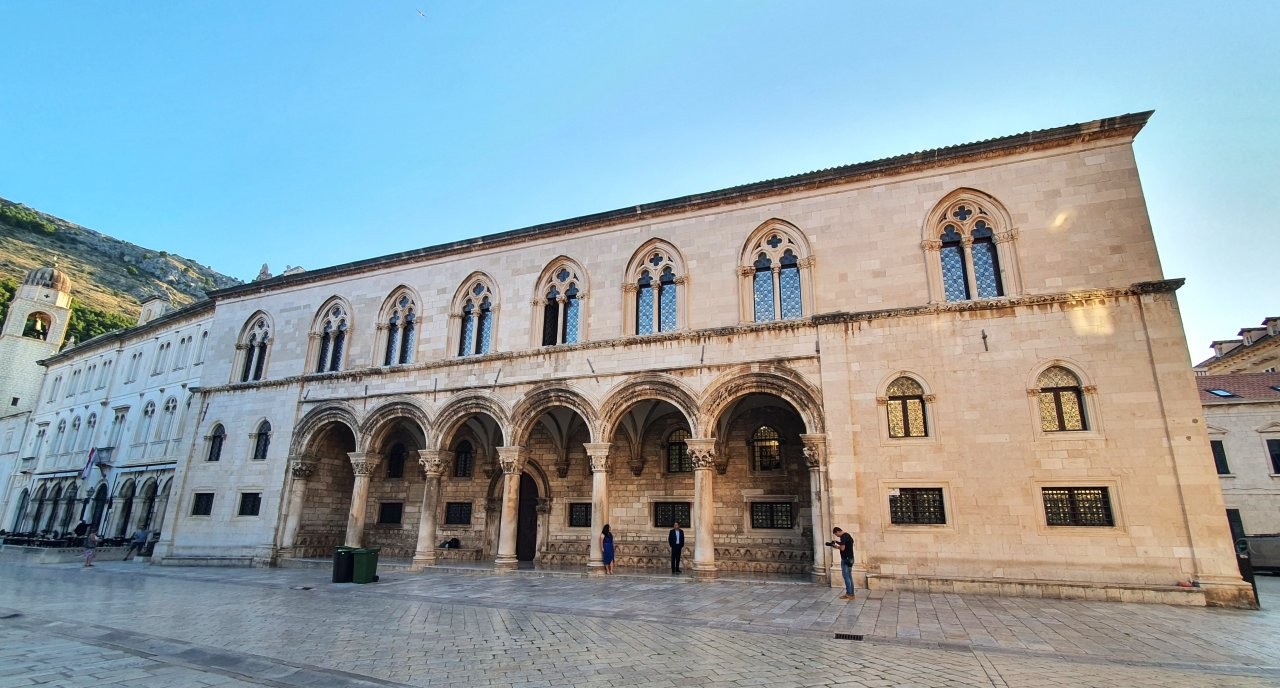
Once the seat of the Republic’s highest official, Rector’s Palace was originally built in the Gothic style by Italian architects with a portico and an atrium.
The inner courtyard and its atrium is dotted with Corinthian-style columns – sleek, slender shapes with well-decorated upper bases.


Damaged by gunpowder explosions in 1435 and 1463, the repaired palace features a beautiful mix of Gothic & Renaissance architectural design.
Following the 1667 earthquake, new Baroque-style stairs were added, leading to the upper floor.
Fun Fact : Classical concerts are held in the courtyard due to its excellent acoustics.
The courtyard also features a bust of the rich sea captain and benefactor Miho Pracat – who donated his entire wealth to the Republic. After his death, the Senate of the Republic erected a monument by Italian sculptor Piero Paolo Giacometti in 1638 to honour Pracat.
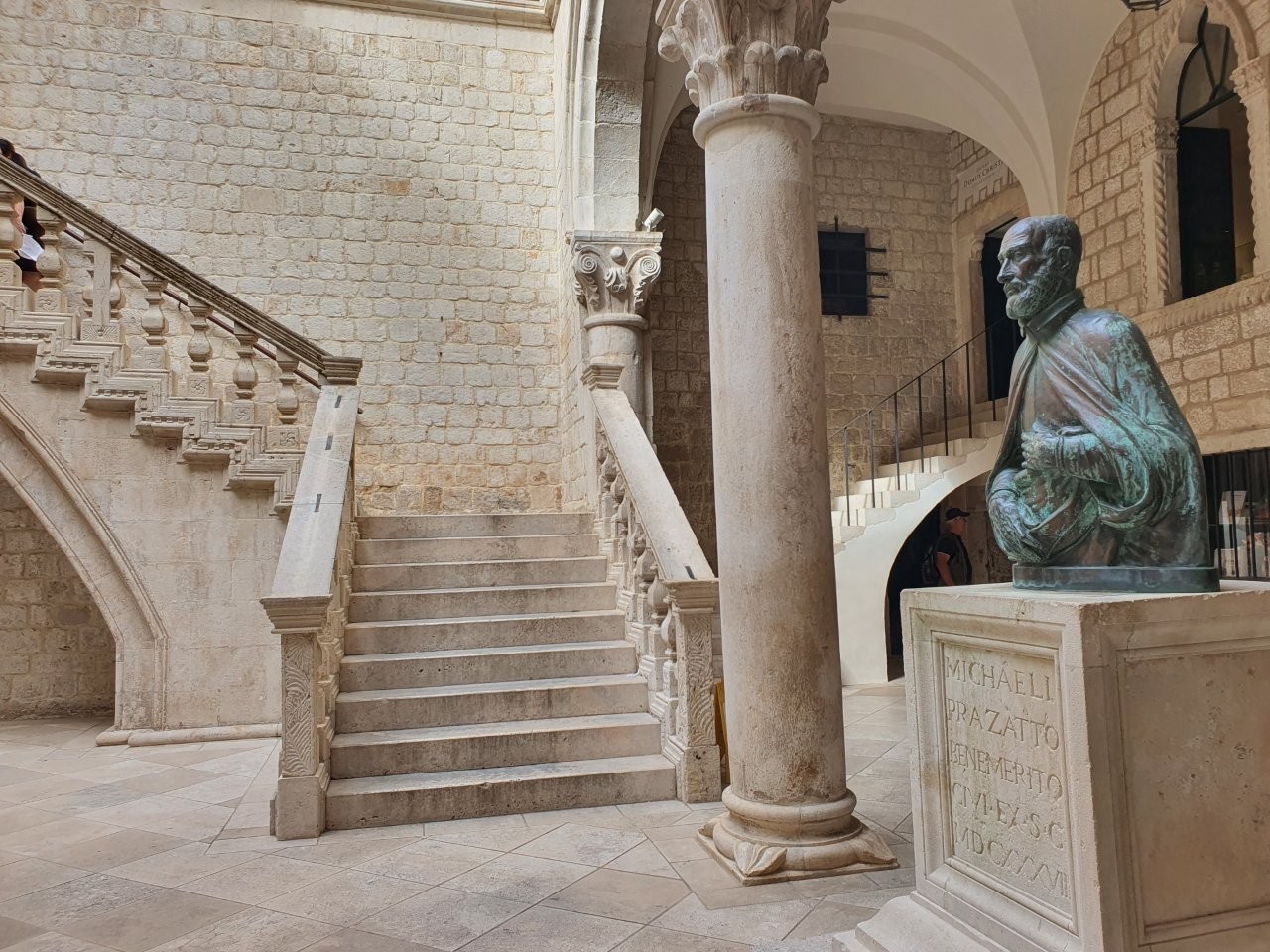
This two-storey building has served as the seat of Rector, administrative headquarters, courthouse, prison, and armory. It includes the Rector’s private chambers, public halls, and a chapel.
Rector’s Palace is now the Cultural History Museum – one of the best museums to learn more about Dubrovnik’s history, back when it was the Republic of Ragusa.
Republic of Ragusa
From the 14th century to 1808, Dubrovnik was a tiny but sophisticated self-governing republic called Ragusa. Local councilors would choose a different citizen to assume the role of Rector for exactly one month – a tradition of rotating governance to prevent any one person from becoming too powerful.
On the ground floor, off the internal courtyard is the entrance to the former meeting rooms of the Great Council and the Senate. A plaque above the well-preserved door reads OBLITI PRIVATORUM PUBLICA CURATE
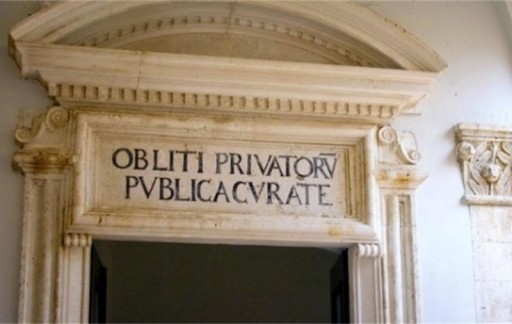
(Forget private affairs; take care of the public ones) serving as a reminder to each newly appointed Rector to set aside personal interests and devote himself entirely to the service, security, and wellbeing of the city during his one-month term.
Safekeeping the keys
As the guardian of the Republic, the rector is entrusted with the town’s keys, personally overseeing the locking of the city gates each evening.


On the upper floor is the restored private quarters and bedchamber used by each elected Rector for exactly 30 days.
The upstairs gallery showcases beautiful old artifacts of the aristocrats – gilt-framed oil paintings, period furniture, lavish costumes alongside coats of arms, coins, the original Code of Conduct and other old documents that tell the history of the Ragusan people.
I was intrigued by the ornately carved dresser, Qing Dynasty Vase and sedan chair.


On the ground floor, among the exhibits is a bust of St Blaise (left) from what was originally a whole figure from the first half of the 15th century and a rare statue from 1503 that depicts St Blaise seated (right).


My final stop was to the former prison cells, watch house and armory.


Dubrovnik Cathedral
Standing just behind Luža Square and near the Rector’s Palace, Dubrovnik Cathedral anchors the southern quarter of the Old Town with its broad Baroque façade and soft grey dome.
Also known as the Cathedral of the Assumption of the Virgin Mary, this Baroque masterpiece was built between 1672 and 1713 on the remains of the earlier Romanesque basilica that was destroyed in the 1667 earthquake.

Dubrovnik Cathedral presents an exquisite fusion of Romanesque and Gothic styles, with its facade adorned in intricate sculptures and crowned by a magnificent bell tower that punctuates the city’s skyline.
Inside, a tranquil ambience prevails. The pale stone and warm lighting draw attention to the eye catching gilded main altar and its celebrated treasure: Titian’s Assumption of the Virgin, painted in the mid-1500s for the earlier church.


In the treasury are precious liturgical items dating from the 1000s to the 1700s including relics of Saint Blaise.
On my way out, I looked back and inland, and had my first glimpse of Mount Srd with Luza Square in the foreground.
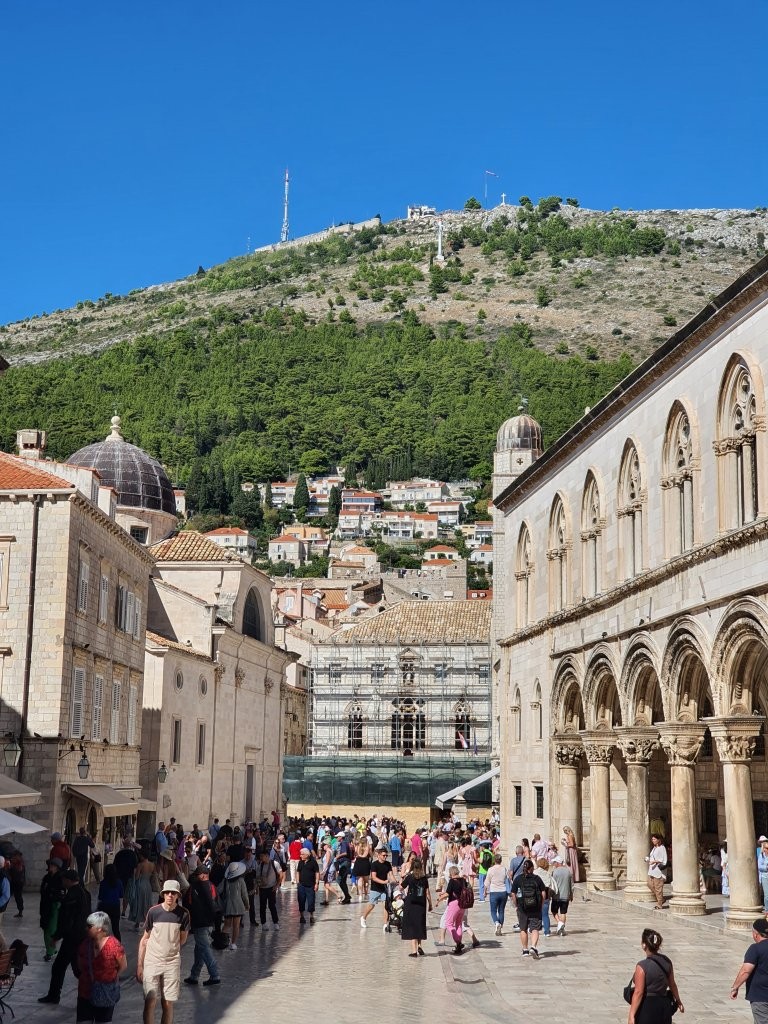
Gundulić Square and the Morning Market
Gundulić Square is just next to Dubrovnik Cathedral. Since 1892, the morning market has been a popular stop with its offerings of local snacks, fresh produce (seasonal fruits, vegetables, cheese, olives, honey, spices) and handmade souvenirs.
Jesuit Stairs
The Jesuit Stairs are a grand Baroque staircase that connects Gundulić Square to the Church of St. Ignatius. Designed by Roman architect Pietro Passalacqua, the stairs (built in 1738) are considered one of the city’s most notable examples of Baroque architecture.


Church of St Ignatius
At the top of the stairs, the imposing Church of St. Ignatius is part of the Jesuit college (Collegium Ragusinum) in Dubrovnik.

Dominating the eastern part of the historic centre of Dubrovnik, the large Baroque church was constructed between 1699 and 1725 by Jesuit architect and painter Andrea Pozzo, modelled after the Roman church of St. Ignatius.

The interior of the church consists of a single nave with side chapels and a semi-circular apse containing frescoes depicting the life of St. Ignatius de Loyola (1491-1556), the founder of the Jesuit order.
St. John Fortress & Porporela
The St John Fortress, often called Mulo Tower stands guard at the entrance of the Old Port, protecting it from sea attacks. Its unique semicircular design allowed it to effectively defend both the harbour and the eastern approach to the city.
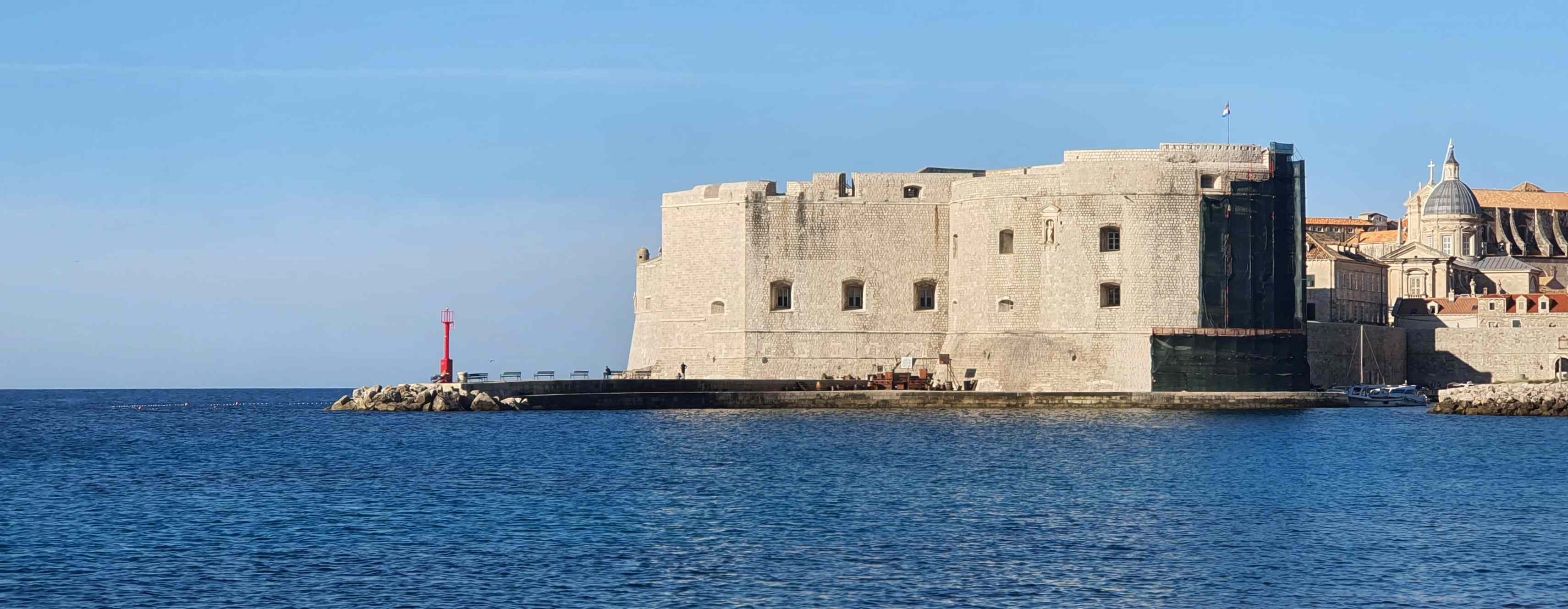
Construction first began around 1346 followed by several modifications during the 15th and 16th centuries. As part of a major fortification upgrade that commenced in 1552, it was merged with the nearby Fort Gundulic into a single building. Upon completion in 1557, it was renamed St John Fortress.

Today the fortress houses a maritime museum, the Pulitika studio and an aquarium.
Porporela is a long stone pier and breakwater that extends from the base of St. John Fortress towards the harbour mouth. Built in the 19th century it was intended to reduce the intensity of waves and southern winds, protecting boats and ships anchored in the harbour.


With open views of Lokrum and the city walls, it is a popular spot for catching the sunrise, leisurely walks, sunbathing and swimming.
Fort Revelin
Fort Revelin is located just outside of the city walls, close to St Luka Fortress. The largest of the old town’s forts, Revelin Fortress was constructed overlooking the old harbour as a means of protecting one of the city’s weakest points (in this case the city gates) with the purpose of reinforcing the defensive position.

This imposing stronghold was first built in 1463 in response to the Ottoman threat and subsequently strengthen in 1538 (completed quickly in 11 years by putting all other construction work in the city on hold). Fort Revelin miraculously survived the 1667 earthquake unscathed.
Today it houses the city’s Archaeological museum and a nightclub, and is used as the stage for the Summer Festival.
Random Exploration
I spent many delightful hours ‘getting lost’ among the cobbled lanes and alleyways. My random wanderings led to discoveries of flower-filled stairs, a private courtyard, atmospheric peepholes, charming quiet alleys, and unexpected art & handicraft corners.
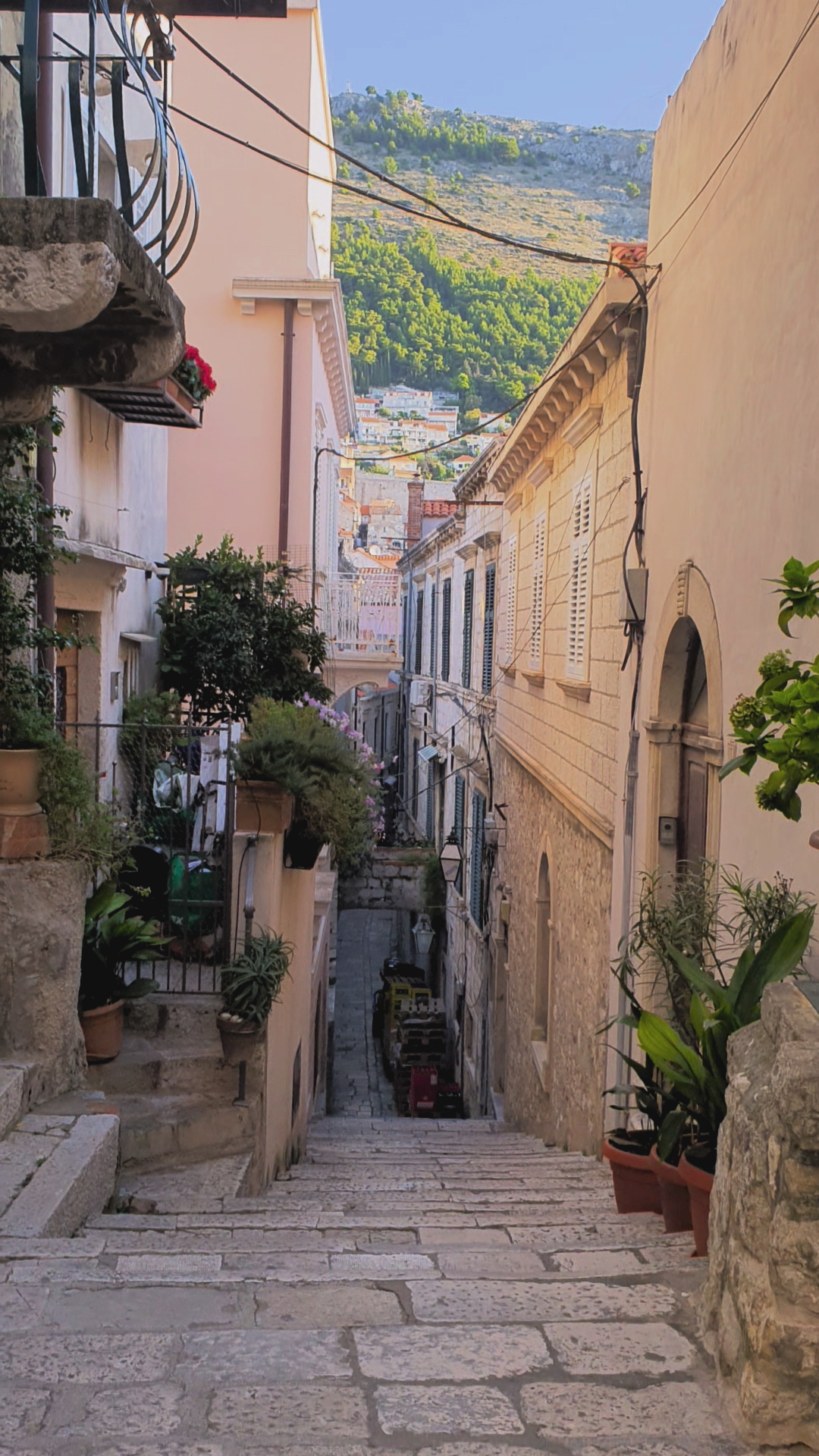


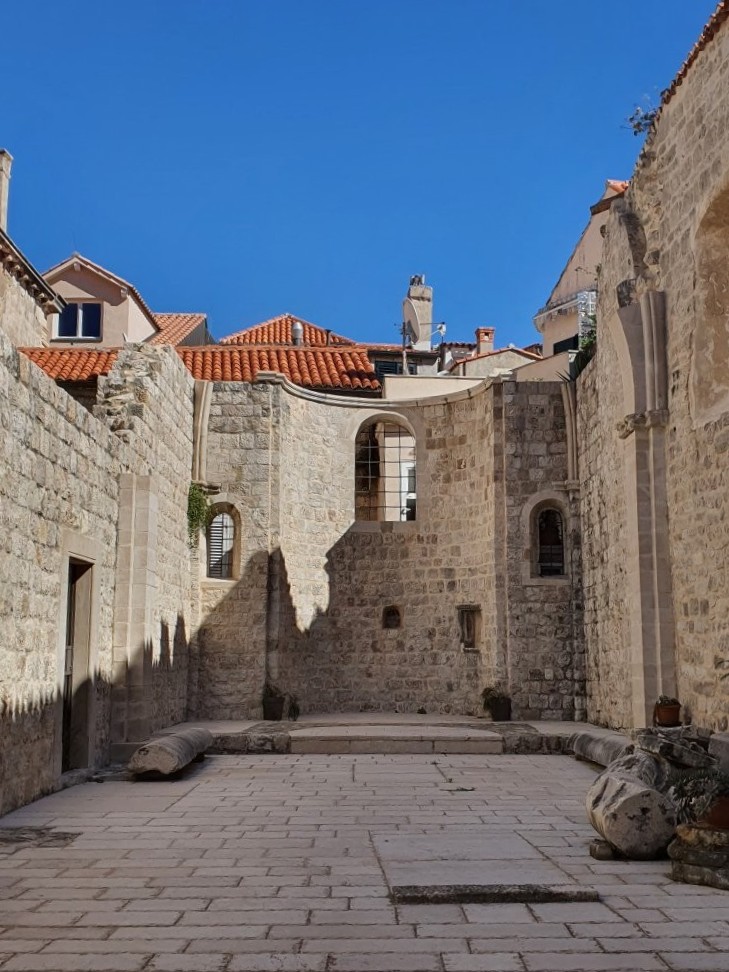


I particularly enjoyed the early morning walks – peaceful, quiet and devoid of crowds – perfect for photography.
Banje Beach
Banje Beach is not just the most iconic beach in Dubrovnik but also one of the most popular beaches on the southern Dalmatia coast. Located 400m in front of the eastern entrance, it is a 5-minute walk from Old Town’s Ploče Gate.
Banje Beach at 2pm (left) vs early morning 9am (right)


With its pebbled shore, crystal clear water and backdropped against the city walls, Lokrum Island and Adriatic waters, it is a favorite spot for swimming and sunbathing.
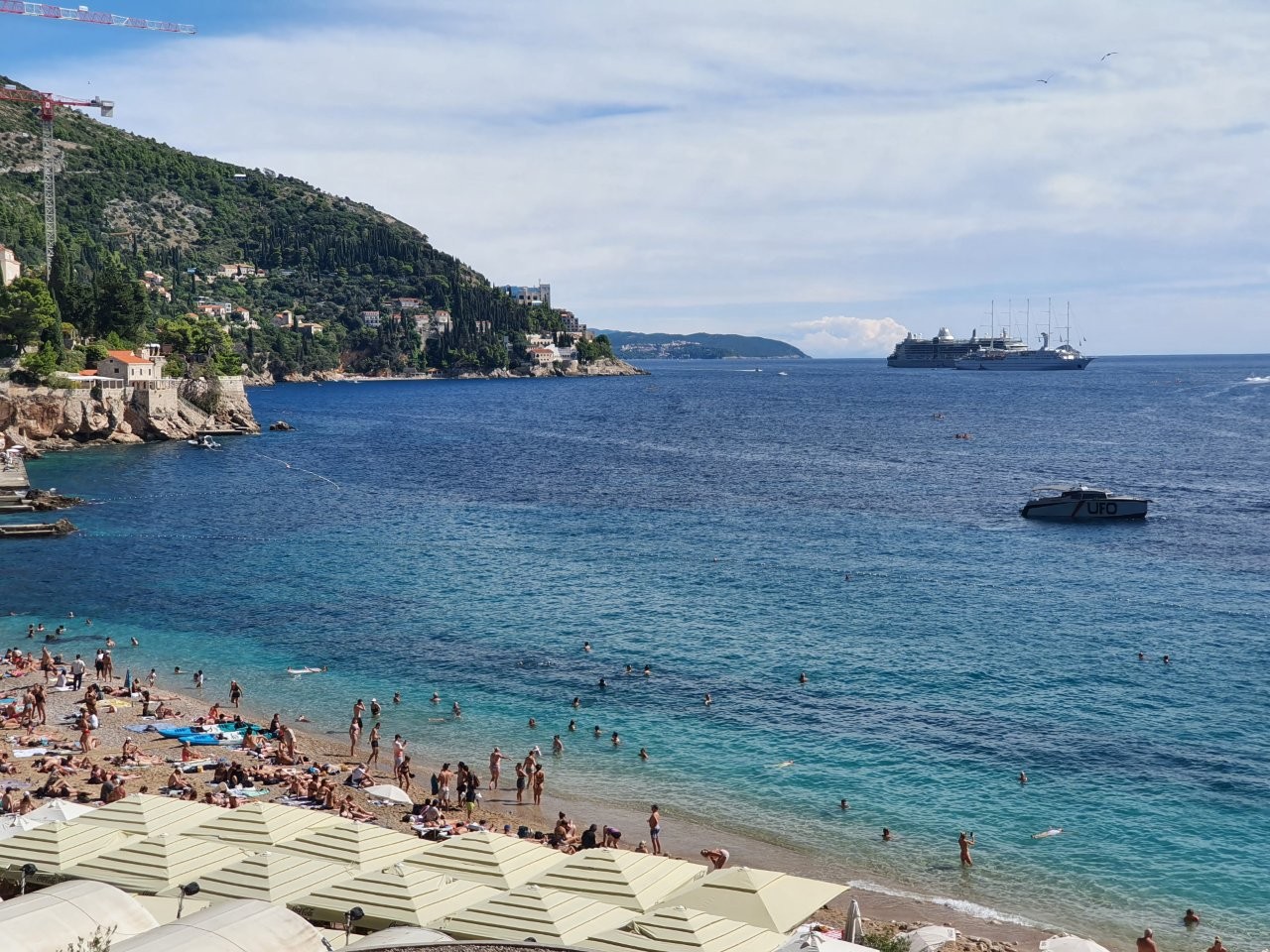


Access to Banje Beach is free, but rentals for sunbed and umbrellas are extra. Facilities include showers, Banje Beach Club, a beachfront restaurant and bar.
 phoenixtrails.home.blog